
 (1 votes, average: 4.00 out of 5)
 Loading...
Park Me
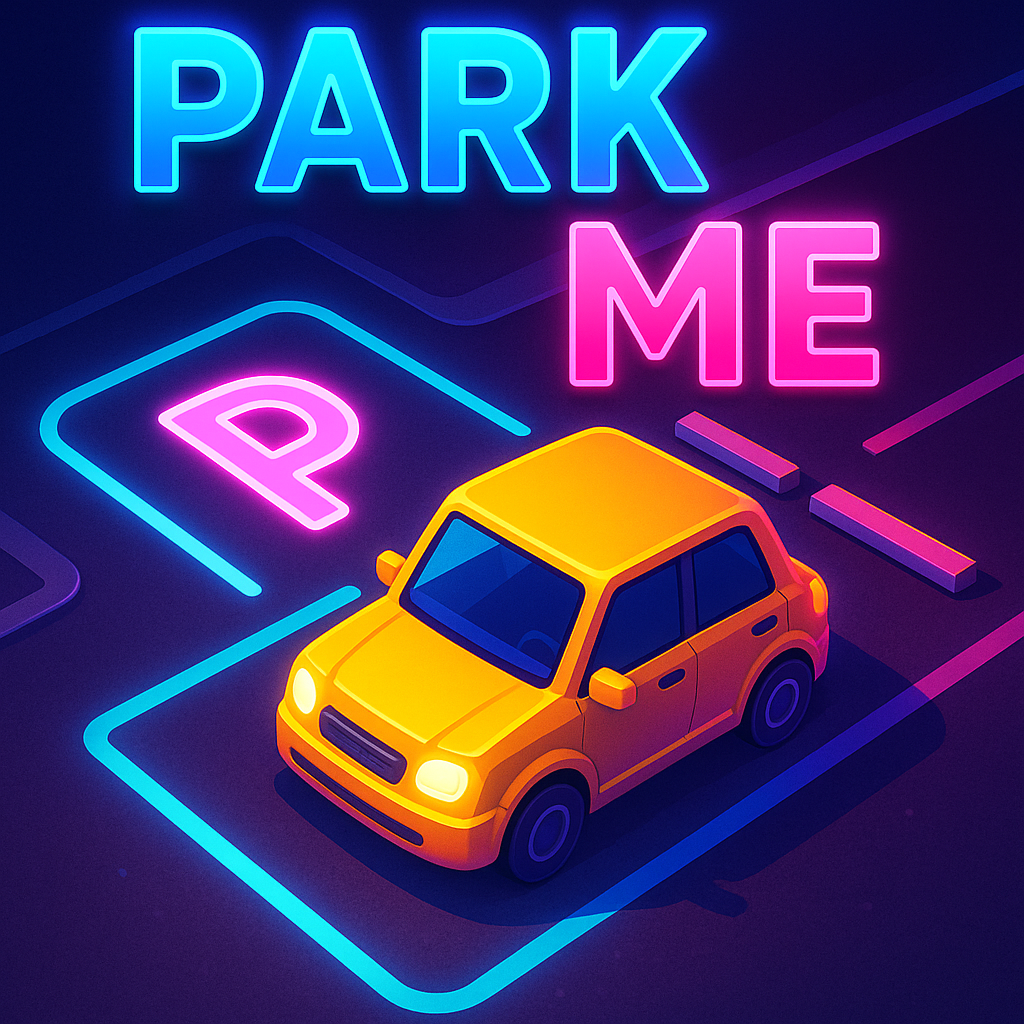
Welcome to the world of Park Me, a captivating sorting game that challenges your logical thinking and problem-solving skills. In this immersive experience, players are tasked with organizing and parking vehicles in a constrained space, drawing inspiration from real-world parking dilemmas. As a member of the sorting category, Park Me emphasizes order, efficiency, and strategic planning, making it a standout choice for gamers of all ages. This article delves deep into the mechanics, benefits, and strategies of Park Me, while exploring its connections to broader concepts like the parking problem. Whether you're a casual player or a dedicated enthusiast, you'll find valuable insights to enhance your gameplay and appreciation for this engaging title.
What Is Park Me and Why It Stands Out
Park Me is a dynamic sorting game where players must efficiently park a variety of vehicles in limited spaces, often under time constraints or with specific rules. The core objective revolves around arranging cars, trucks, and other vehicles in a way that maximizes space utilization while avoiding obstructions. What sets Park Me apart from other games in the sorting genre is its realistic simulation of parking scenarios, which not only entertains but also sharpens cognitive abilities. By focusing on spatial awareness and sequential logic, Park Me offers a unique blend of fun and mental exercise. Players often report improved decision-making skills after regular sessions with Park Me, highlighting its educational value alongside its entertainment appeal.
The game's interface is designed to be intuitive, with drag-and-drop controls that mimic real-life parking maneuvers. As you progress through levels in Park Me, the complexity increases, introducing elements like multi-level parking lots, moving obstacles, and varying vehicle sizes. This gradual ramp-up ensures that players remain engaged without feeling overwhelmed. Moreover, Park Me incorporates elements of puzzle-solving, requiring users to think several steps ahead—a hallmark of effective sorting games. For those interested in similar experiences, check out My Parking Lot, another excellent game that complements the skills developed in Park Me.
The Sorting Category in Gaming: An Overview
Sorting games like Park Me belong to a broader category that focuses on organizing items, data, or elements based on specific criteria. This genre has gained popularity due to its ability to enhance logical reasoning, pattern recognition, and attention to detail. In the context of Park Me, sorting involves arranging vehicles in a logical sequence to optimize space and flow. This not only mirrors real-world tasks but also taps into the human brain's innate desire for order. Games in this category, including Park Me, often feature progressively challenging levels that teach players to adapt their strategies, making them ideal for brain training and skill development.
Historically, sorting games have evolved from simple card games to complex digital simulations, with Park Me representing a modern iteration that leverages advanced graphics and physics engines. The appeal of sorting games lies in their simplicity paired with depth; even basic tasks in Park Me can require sophisticated planning. For instance, deciding where to place a large truck in a crowded lot involves weighing multiple factors, such as available space and future vehicle arrivals. This multifaceted approach is why Park Me and similar titles are often recommended for educational purposes, helping users develop critical thinking in an enjoyable format.
How Park Me Works: Game Mechanics Explained
At its core, Park Me operates on a straightforward premise: players must park vehicles in designated spots without causing collisions or blockages. The game typically starts with a simple parking lot layout and a small number of cars. As you advance, Park Me introduces complexities like timed challenges, limited moves, and environmental hazards. Each level in Park Me presents a unique puzzle, requiring players to sort vehicles based on size, type, or priority. For example, emergency vehicles might need immediate parking, adding a layer of urgency to the sorting process. This mechanic not only keeps the gameplay fresh but also reinforces the importance of efficiency in real-life scenarios.
Controls in Park Me are user-friendly, often involving touch or click gestures to move vehicles. The game provides visual feedback, such highlighted zones or color-coded indicators, to guide players in making optimal decisions. In Park Me, success is measured by how quickly and accurately you park all vehicles, with bonus points for minimal moves or perfect alignment. This scoring system encourages replayability, as players strive to improve their performance in Park Me. Additionally, the game may include power-ups or hints to assist in tougher levels, ensuring that Park Me remains accessible while still offering a challenge for experts.
Benefits of Playing Sorting Games Like Park Me
Engaging with Park Me and other sorting games yields numerous cognitive and emotional benefits. Firstly, these games enhance problem-solving skills by requiring players to analyze situations and devise effective strategies. In Park Me, for instance, you must constantly evaluate spatial relationships and anticipate consequences, which translates to better decision-making in everyday life. Studies have shown that regular play of sorting games like Park Me can improve memory and concentration, as players need to recall patterns and rules across levels. This mental workout is particularly beneficial for children and older adults, aiding in cognitive development and maintenance.
Secondly, Park Me promotes stress relief by providing a focused, goal-oriented activity. The satisfaction of successfully parking a difficult vehicle in Park Me can release dopamine, boosting mood and reducing anxiety. Moreover, the repetitive yet engaging nature of sorting in Park Me can induce a state of flow, where players lose track of time and become fully immersed. This makes Park Me an excellent tool for mindfulness and relaxation. Socially, Park Me can foster connections through multiplayer modes or online leaderboards, encouraging friendly competition and collaboration. Overall, the benefits of Park Me extend beyond entertainment, contributing to personal growth and well-being.
Strategies for Mastering Park Me
To excel in Park Me, players should adopt a systematic approach to sorting and parking. One effective strategy is to prioritize larger vehicles early in the game, as they occupy more space and can limit options if parked later. In Park Me, this means assessing the lot layout and identifying spots that can accommodate trucks or vans without obstructing pathways. Another key tactic in Park Me is to leave escape routes for other vehicles; this prevents deadlocks and allows for easier adjustments. Practicing these techniques in Park Me will help you develop a keen eye for spatial optimization, which is crucial for advancing to higher levels.
Additionally, time management is vital in Park Me, especially in timed modes. Players should avoid rushing and instead take a moment to plan their moves sequentially. Using the undo or reset features in Park Me can also be beneficial for experimenting with different sorting patterns without penalty. For advanced players, Park Me offers opportunities to minimize moves by thinking several steps ahead—similar to chess strategies. By consistently applying these methods, you'll find that Park Me becomes more manageable and enjoyable. Remember, the goal of Park Me is not just to park vehicles but to do so efficiently, reflecting the principles of effective sorting.
Comparing Park Me to Other Sorting Games
When evaluating Park Me against other titles in the sorting genre, it's clear that each game brings unique elements to the table. Below is a table that highlights key differences and similarities, focusing on aspects like gameplay mechanics, difficulty, and educational value. This comparison underscores why Park Me remains a favorite among enthusiasts.
| Game Title | Core Mechanics | Difficulty Level | Educational Focus | Unique Features |
|---|---|---|---|---|
| Park Me | Vehicle parking and spatial sorting | Medium to Hard | Spatial reasoning, logic | Realistic physics, multi-level lots |
| My Parking Lot | Parking lot management | Easy to Medium | Resource management | Customizable lots, economic elements |
| Sort It Out | Item categorization | Easy | Pattern recognition | Color-based sorting, timed challenges |
| Stack 'Em Up | Block stacking and balancing | Medium | Physics understanding | 3D environments, gravity effects |
As shown in the table, Park Me distinguishes itself with its focus on realistic parking scenarios and gradual difficulty progression. While other games like My Parking Lot emphasize management aspects, Park Me hones in on pure sorting skills, making it ideal for players seeking a mental challenge. The external resource on the parking problem provides additional context, showing how Park Me mirrors real-world issues in mathematics and urban planning. This connection enriches the gameplay experience, as players of Park Me can appreciate the practical applications of their virtual efforts.
The Real-World Parking Problem and Its Relevance to Park Me
The parking problem, a well-documented issue in urban studies and mathematics, involves optimizing limited parking spaces to accommodate vehicles efficiently. This concept is central to Park Me, as the game simulates these challenges in a virtual environment. By engaging with Park Me, players gain insight into the complexities of real-life parking, such as traffic flow, space allocation, and time constraints. For example, in dense urban areas, the parking problem often leads to congestion and frustration—issues that Park Me helps players understand and mitigate through strategic sorting. This educational aspect makes Park Me more than just a game; it's a tool for raising awareness about sustainable urban design.
Moreover, the parking problem has inspired algorithms and models in computer science, many of which are subtly integrated into Park Me's level design. Players of Park Me might notice that higher levels require solutions similar to those used in optimization software, highlighting the game's foundation in real-world logic. By exploring the parking problem further, enthusiasts of Park Me can deepen their appreciation for the game's design and its implications beyond entertainment. Ultimately, Park Me serves as a bridge between virtual fun and practical knowledge, encouraging players to think critically about everyday sorting dilemmas.
Enhancing Your Skills with Park Me and Related Games
To maximize the benefits of Park Me, players should complement their gameplay with related activities and games. For instance, practicing with My Parking Lot can reinforce the sorting skills honed in Park Me, as both games share a focus on efficient space management. Additionally, engaging in real-world tasks like organizing a closet or planning a route can translate directly to improved performance in Park Me. The key is to view Park Me as part of a broader skill-building ecosystem, where each session contributes to sharper cognitive abilities. Many players of Park Me report that regular play has helped them in professional settings, such as project management or logistics, where sorting and prioritization are essential.
Furthermore, online communities and forums dedicated to Park Me offer tips, walkthroughs, and challenges that can accelerate learning. By sharing strategies and experiences, players of Park Me can overcome difficult levels and discover new approaches to sorting. It's also helpful to set personal goals in Park Me, such as achieving a perfect score on each level or completing the game without hints. This goal-oriented mindset not only enhances enjoyment but also builds discipline and perseverance. In summary, Park Me is a versatile game that, when combined with complementary practices, can lead to significant personal and cognitive growth.
Conclusion: The Enduring Appeal of Park Me
In conclusion, Park Me stands as a premier example of the sorting genre, offering a blend of entertainment, education, and mental stimulation. Its realistic approach to parking challenges, coupled with progressive difficulty, ensures that players remain engaged while developing valuable skills. The connections to real-world issues like the parking problem add depth to the Park Me experience, making it a game that resonates on multiple levels. Whether you're playing for fun or self-improvement, Park Me delivers a rewarding journey through the art of sorting. As you continue to explore Park Me, remember that each parked vehicle represents a step toward sharper thinking and better problem-solving—a testament to the game's lasting impact.
Thank you for diving into the world of Park Me with this comprehensive guide. We hope it inspires you to park, sort, and succeed in all your gaming endeavors. Keep playing Park Me and discover the endless possibilities that sorting games have to offer!
FAQ
- Question: What cognitive skills does 'Park Me' develop through its sorting mechanics?
Answer: 'Park Me' strengthens executive functions like planning, organization, and task switching through its vehicle sorting puzzles. Players must categorize cars by size, color, or parking constraints while adapting to changing lot layouts, which directly trains cognitive flexibility and working memory. This translates to real-world benefits like improved multitasking and problem-solving efficiency in daily tasks. - Question: How does 'Park Me' specifically target working memory improvement?
Answer: The game challenges players to track multiple vehicle attributes simultaneously while planning optimal parking sequences, creating constant working memory engagement. By requiring mental manipulation of spatial relationships and category rules under time pressure, 'Park Me' provides targeted exercise for the prefrontal cortex. Regular play can enhance your ability to hold and process complex information in professional or academic settings. - Question: Can 'Park Me' help with real-world organizational skills?
Answer: Absolutely. The sorting mechanics in 'Park Me' mirror real organizational challenges like prioritizing tasks or optimizing space utilization. Players develop systematic thinking patterns by categorizing vehicles based on multiple constraints, which strengthens mental organization frameworks. These skills directly transfer to improved office workflow management, home organization, and strategic planning abilities. - Question: What makes 'Park Me' effective for cognitive maintenance in adults?
Answer: 'Park Me' incorporates progressive difficulty and novel sorting challenges that prevent cognitive stagnation, crucial for maintaining brain health. The game's requirement to quickly switch between different categorization criteria provides excellent stimulation for neural plasticity. This continuous adaptation helps combat age-related cognitive decline while keeping mental processes sharp and responsive. - Question: How does the sorting aspect of 'Park Me' enhance problem-solving abilities?
Answer: Each parking puzzle in 'Park Me' presents unique sorting problems that require analytical thinking and strategy adjustment. Players must identify patterns, anticipate consequences of placement decisions, and develop efficient categorization approaches. This systematic problem-solving practice enhances your ability to break down complex challenges into manageable components in both personal and professional contexts. - Question: What attention benefits can players expect from regular 'Park Me' sessions?
Answer: 'Park Me' demands sustained attention to detail and rapid focus shifting between visual elements and sorting rules. The game's timed puzzles train selective attention by requiring players to filter relevant information while ignoring distractions. This leads to improved concentration spans and better attentional control in daily activities like driving, studying, or workplace tasks.