
 Loading...
Word Clash: The Ultimate Battle of Wits and Vocabulary
In the vibrant and ever-expanding universe of word games, a new champion vies for the attention of logophiles and puzzle enthusiasts alike. Word Clash has emerged as a formidable contender, blending competitive spirit with the cerebral satisfaction of word construction. This game is more than a simple pastime; it is a dynamic arena where vocabulary, strategy, and speed collide. Whether you're a seasoned wordsmith or a casual player looking to sharpen your mind, Word Clash offers a compelling and addictive experience that tests the limits of your linguistic arsenal.
What is Word Clash?
At its core, Word Clash is a multiplayer word puzzle game designed for real-time competition. Players are presented with a set of letters and must quickly form as many valid words as possible within a limited time frame. The twist? You're not playing against a static puzzle or a passive opponent. You are directly clashing with another player or multiple opponents in a live match, each racing to find words and claim points before the clock runs out. The game brilliantly combines elements of classics like anagrams and Scrabble with the fast-paced, head-to-head format of modern mobile esports. The result is a thrilling, nerve-wracking, and immensely rewarding experience that makes every match a unique Word Clash.
The Anatomy of a Word Clash Match
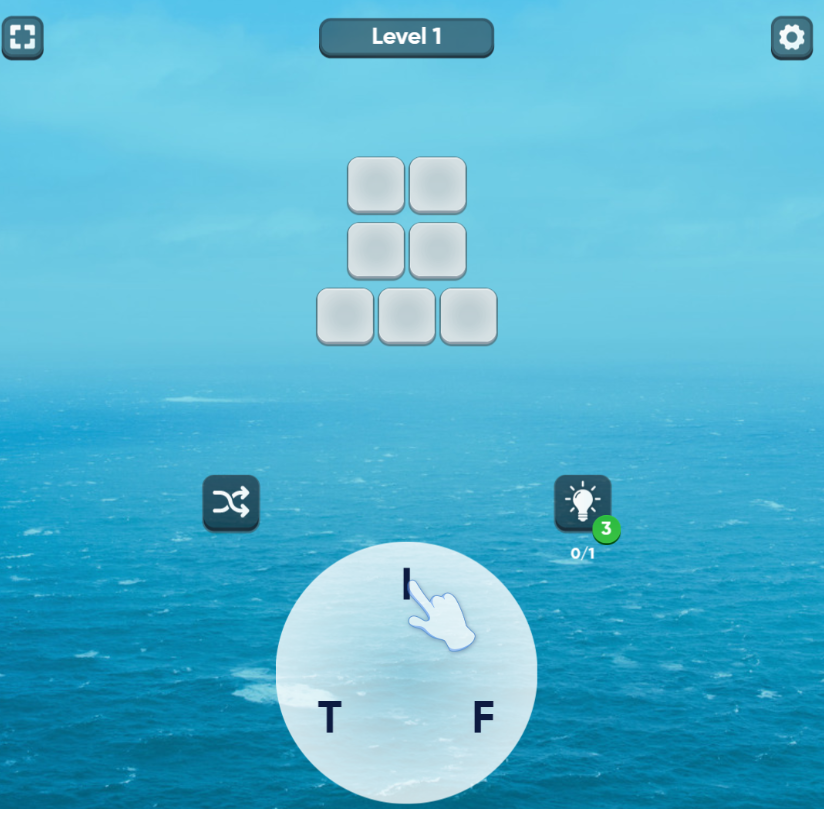
Understanding the flow of a game is key to mastering Word Clash. A typical match unfolds in a series of intense rounds. Upon entering a game, you and your opponent are given an identical grid or pool of letters. A countdown begins, and the battle commences. Your goal is to swipe through the letters to form words of three letters or more. Each word scores points based on its length and the complexity of its letters (less common letters like 'Q,' 'Z,' and 'X' often yield higher points).
In real-time, you can see your opponent's progress—sometimes as a score tally, sometimes as a visual indication of words they've already found. This adds a layer of psychological strategy. Do you go for quick, short words to build an early lead, or do you spend precious seconds hunting for that one high-scoring seven-letter word that could swing the match? The timer is your constant adversary, and the pressure mounts as the final seconds tick away. When the round ends, the player with the highest score wins, advancing their rank and earning in-game rewards. This core loop of Word Clash is simple to learn but offers profound depth for those willing to dive into its strategic nuances.
Key Game Modes
Word Clash typically features several game modes to cater to different playstyles:
- 1v1 Duel: The classic head-to-head format. Test your skills against a single opponent in a pure battle of vocabulary and speed.
- Tournament Mode: Compete in brackets against multiple players, climbing the ladder to become the ultimate champion and win exclusive prizes.
- Team Battle: Join forces with friends or other players to take on rival teams. Coordination and covering each other's lexical weaknesses are crucial.
- Practice/Puzzle Mode: A solo mode where you can play without pressure, often with specific challenges like "Find all words with 5 letters" or "Use the letter 'J' in three words." This is an excellent way to hone your skills for the more competitive Word Clash matches.
Strategies for Dominating in Word Clash
Success in Word Clash isn't solely about having a vast vocabulary; it's about applying it effectively under pressure. Here are proven strategies to elevate your game.
1. Master the Short Game First
While long words are tempting for their high scores, consistently finding all possible three and four-letter words is the foundation of a high score. These words are quicker to spot and form, allowing you to build a steady point stream and potentially block your opponent from using those letter combinations. Before you search for complex words, quickly scan for obvious small words like "THE," "AND," "CAT," "DOG," etc. A fast start can create a psychological advantage in any Word Clash.
2. Identify Common Prefixes and Suffixes
This is a powerhouse strategy. Look for common building blocks like UN-, RE-, -ING, -ED, -ER, -EST, -TION, and -LY. If you see the letters for these fragments, you can rapidly generate multiple words by attaching them to different roots. For example, if you have "PLAY," and the letters for "RE" and "ING," you can quickly form "PLAY," "REPLAY," "PLAYING," and "REPLAYING." This multiplicative thinking is essential for high-level Word Clash play.
3. Prioritize High-Value Letters
Always be on the lookout for the Scrabble power tiles: J, Q, X, Z, K, V, F, W, and M. Words containing these letters are worth significantly more points. Even a short word like "ZAX" or "JIN" can be worth more than a common five-letter word. In the heat of a Word Clash, train your eyes to gravitate toward these letters first.
| Letter | Approximate Point Value | Example Short Word |
| Q, Z | 10+ | QUIZ, ZAX |
| J, X | 8-9 | JIN, AXE |
| K, V, F, W, M | 4-5 | KEG, VAT, FEW, WOW, MUM |
| Common Vowels (A,E,I,O,U) | 1 | ARE, OUI |
4. Practice Pattern Recognition
Expert players don't see random letters; they see patterns and potential word stems. Look for consonant-vowel-consonant (CVC) patterns, double letters, and common digraphs (TH, CH, SH, PH). This subconscious scanning drastically increases your word-finding speed, giving you a critical edge in a close Word Clash.
The Cognitive Benefits of Playing Word Clash
Beyond entertainment, engaging in regular Word Clash matches offers tangible cognitive benefits. It's a potent workout for your brain, exercising multiple mental faculties simultaneously.
Vocabulary Expansion
The most obvious benefit. Exposure to new letter combinations and the words your opponents find inevitably teaches you new terms. Many Word Clash games include definitions or allow you to review words after a match, turning every game into a learning opportunity. This constant engagement helps solidify your existing vocabulary and introduces you to obscure but valid words that could be the key to your next victory.
Improved Processing Speed and Mental Agility
The timed nature of Word Clash forces your brain to process information, make connections, and execute decisions at a rapid pace. This trains your cognitive processing speed, which is crucial for problem-solving in many real-world situations. The mental agility required to switch between looking for short words, long words, and high-value combinations is a fantastic exercise in flexible thinking.
Enhanced Concentration and Focus
In a live match, distraction means defeat. Word Clash demands and therefore trains sustained, deep focus. You learn to block out external noise and internal chatter to concentrate solely on the letter grid and the ticking clock. This skill of "getting in the zone" is transferable to work, study, and other tasks requiring prolonged attention.
Word Clash in the Broader World of Word Games
To appreciate the innovation of Word Clash, it's helpful to understand its place in the grand tapestry of word games. Word games have a rich history, from ancient letter-based puzzles to modern digital phenomena. Traditional board games like Scrabble and Boggle established the foundational pleasures of anagramming and word search. Crosswords challenged deductive reasoning and trivia knowledge.
Word Clash takes these core concepts—letter rearrangement, vocabulary knowledge, and pattern finding—and injects them with the adrenaline of real-time, synchronous competition. It represents the evolution of the genre into the social and mobile gaming era. While a game like Words with Puzzles might focus on a more relaxed, solo puzzle-solving experience, Word Clash is inherently social and confrontational. It captures the thrill of a live sports match, but the stadium is your mind, and the equipment is your lexicon.
Building a Community and Competitive Scene
A significant factor in the longevity of any modern game is its community. Word Clash excels here by integrating social features seamlessly. Players can connect with friends, send challenges, form clubs or guilds, and participate in global leaderboards. In-game chat functions (often with pre-set, positive messages to maintain sportsmanship) allow for friendly banter or congratulatory remarks after a particularly intense Word Clash.
The competitive scene is where Word Clash truly shines for dedicated players. Regular ranked seasons with tiered leagues (e.g., Bronze, Silver, Gold, Platinum) provide clear progression goals. End-of-season rewards, such as exclusive avatars, titles, or currency, motivate continuous play. Some developers even host official online tournaments with substantial prizes, legitimizing Word Clash as a competitive esport for the mind. This structure transforms the game from a casual diversion into a hobby with goals, rivalries, and a sense of achievement.
Technical Aspects and Accessibility
Word Clash is designed to be accessible to a wide audience. It is typically available as a free-to-download app on iOS and Android, with optional in-app purchases for cosmetic items or time-savers. The game's interface is usually clean and intuitive, with large, easy-to-swipe tiles and clear visual feedback for formed words. Developers often include accessibility features like adjustable font sizes, colorblind modes, and the option to reduce animation speeds, ensuring that the joy of a good Word Clash is available to as many people as possible.
The game also requires a stable internet connection for its real-time PvP (Player vs. Player) modes, which is its primary draw. However, the inclusion of robust solo practice modes and sometimes asynchronous play (like taking a turn when you have time) ensures players can engage with Word Clash even when offline or unable to commit to a live match.
The Future of Word Clash and Word Gaming
The future looks bright for games like Word Clash. As technology advances, we can expect even more immersive and feature-rich experiences. Potential developments could include:
- Cross-Platform Play: Seamlessly matching mobile players with those on PC or consoles, broadening the player pool.
- Augmented Reality (AR) Integration: Imagine projecting the letter grid onto your table and physically gesturing to form words against a friend sitting across from you.
- Advanced AI Opponents: Sophisticated bots that adapt to your skill level, providing a perfect challenge for solo practice, analyzing your play patterns to suggest weaknesses.
- Thematic Events and Collaborations: Limited-time events with special letter sets based on popular movies, books, or historical periods, keeping the Word Clash experience fresh and engaging.
The core appeal of Word Clash—the immediate, head-to-head test of linguistic skill—is timeless. It taps into our fundamental love for language and friendly competition. By continuously evolving its features, community support, and competitive structures, Word Clash is poised to remain a staple in the word game genre for years to come.
Conclusion: Your Next Challenge Awaits
Word Clash is more than just another app on your phone. It is a portal to a global arena of mental athletics. It offers a unique blend of solitary focus and social interaction, of deep knowledge and split-second decision-making. Every match is a story: a comeback win, a heartbreaking loss by a single point, the discovery of a brilliant new word. The game respects your intelligence while pushing you to improve, making every victory earned and every defeat a lesson.
Whether you seek to expand your vocabulary, sharpen your mind, experience the thrill of competition, or simply find a fun way to connect with friends across the miles, Word Clash delivers. It stands as a testament to the enduring power and excitement of word games, reimagined for the connected age. So, download the game, step into the arena, and prepare for your first Word Clash. The letters are waiting, the clock is ticking, and your next opponent is already online.
FAQ
- Question: How does playing Word Clash improve my vocabulary and language skills?
Answer: Word Clash directly enhances vocabulary and language skills by requiring players to form words from a given set of letters under time pressure. This process strengthens lexical access, which is the brain's ability to quickly retrieve words from memory, and encourages the learning of new words through exposure and pattern recognition. Regular play can expand your active vocabulary, improve spelling, and deepen your understanding of word structures, making you a more articulate and effective communicator in daily life. - Question: What specific cognitive skills does Word Clash train, and how?
Answer: Word Clash is a potent brain-training tool that primarily targets executive functions like working memory, cognitive flexibility, and processing speed. As you scramble to find words, your working memory holds letter combinations, cognitive flexibility allows you to shift strategies and see different patterns, and processing speed determines how quickly you can identify valid words. This combination mirrors real-world problem-solving, where you must manage information, adapt to new constraints, and think on your feet, thereby sharpening your overall mental agility. - Question: Can Word Clash help with focus and concentration?
Answer: Yes, Word Clash is excellent for training sustained attention and concentration. The game's timed rounds and competitive elements create a state of focused immersion, where you must filter out distractions to spot word patterns. This practice in directed attention strengthens your brain's ability to maintain concentration on a single task, a skill that translates to improved productivity and reduced mind-wandering in work or study environments. The engaging puzzle format makes this focus training feel like play rather than a chore. - Question: How does the competitive aspect of Word Clash enhance cognitive benefits?
Answer: The competitive mechanics in Word Clash, such as leaderboards or head-to-head matches, introduce an element of mild stress and heightened engagement that amplifies cognitive training. This environment pushes your brain to operate at a higher level, improving decision-making speed under pressure and strategic thinking as you anticipate an opponent's moves. It trains emotional regulation and resilience alongside pure word skill, providing a more holistic brain workout that prepares you for high-stakes real-world scenarios requiring quick, calm, and effective thinking. - Question: Is there a recommended way to play Word Clash for maximum brain-training effect?
Answer: For optimal cognitive benefit, approach Word Clash with intentionality. Play regularly in short, focused sessions rather than marathons to avoid fatigue and maintain peak mental performance. Challenge yourself by increasing difficulty settings or focusing on finding longer, more complex words to engage deeper processing. Periodically, play without the timer to explore creative word combinations, then reintroduce time pressure to train speed. This varied practice ensures you exercise a broader range of cognitive muscles, from fluid reasoning to rapid execution. - Question: How do the benefits of playing Word Clash translate to everyday life outside the game?
Answer: The cognitive skills honed in Word Clash have direct, practical applications in daily life. Enhanced vocabulary and verbal fluency improve communication in both professional and personal settings. The improved working memory and processing speed aid in multitasking and learning new information efficiently. Furthermore, the problem-solving and pattern recognition skills developed are invaluable for tasks ranging from planning and analysis to creative brainstorming, making you a more adept and agile thinker in navigating complex, real-world challenges.