

 (1 votes, average: 4.00 out of 5)
 Loading...
Snake Puzzle: Slither to Eat!
Welcome to the captivating world of Snake Puzzle: Slither to Eat!, a modern twist on the classic arcade game that has enthralled generations. As a premier brain game, it challenges your strategic thinking, reflexes, and problem-solving skills in a fun, addictive package. Whether you're a nostalgic gamer or a newcomer seeking mental stimulation, this game offers endless hours of engagement. In this comprehensive guide, we'll delve into the intricacies of Snake Puzzle: Slither to Eat!, exploring its gameplay, benefits, and tips to master it. By the end, you'll understand why this puzzle deserves a spot in your daily routine for cognitive enhancement.
The Timeless Appeal of Snake Games: A Historical Perspective
The snake game genre has a rich history dating back to the 1970s, with roots in arcade and mobile gaming. Originating from simple block-based mechanics, it evolved into complex puzzles that test spatial awareness and planning. The classic Snake video game genre, as documented on Wikipedia, highlights how these games have adapted over decades, from basic grids to advanced variants like Snake Puzzle: Slither to Eat!. This evolution reflects a shift towards brain-training applications, where games are designed not just for entertainment but for mental agility. Understanding this background enriches your appreciation for how Snake Puzzle: Slither to Eat! builds on tradition while innovating for modern audiences.
In the early days, snake games were simplistic, focusing on avoiding obstacles and growing the snake. However, with technological advances, developers incorporated puzzles elements, turning them into brain games that require foresight and logic. Snake Puzzle: Slither to Eat! exemplifies this progression by adding layers of complexity, such as maze-like boards and power-ups, that demand critical thinking. As a brain game, it stands out by blending retro charm with cognitive challenges, making it a perfect tool for sharpening your mind. The genre's endurance proves its universal appeal, and this puzzle version takes it to new heights with engaging mechanics that keep players hooked.
What Makes Snake Puzzle: Slither to Eat! a Standout Brain Game?
Snake Puzzle: Slither to Eat! is more than just a casual pastime; it's a meticulously designed brain game that targets multiple cognitive functions. At its core, the game involves controlling a snake to consume items on a grid while avoiding collisions with walls or its own tail. But what sets it apart are the puzzle elements—each level introduces new obstacles, time limits, and strategic requirements that force you to think several moves ahead. This constant mental engagement makes Snake Puzzle: Slither to Eat! an effective workout for your brain, improving skills like pattern recognition, decision-making, and adaptability.
As a brain game, Snake Puzzle: Slither to Eat! falls into the category of spatial reasoning and logic puzzles. It requires you to visualize paths, anticipate consequences, and optimize routes, which are essential abilities in daily life and professional settings. The game's difficulty scales gradually, ensuring that players of all ages and skill levels can benefit. Whether you're playing to unwind or to boost your mental acuity, Snake Puzzle: Slither to Eat! delivers a rewarding experience that combines fun with function. Its intuitive design means you can jump right in, but mastering it demands dedication and smart strategies.
How to Play Snake Puzzle: Slither to Eat!: A Step-by-Step Guide
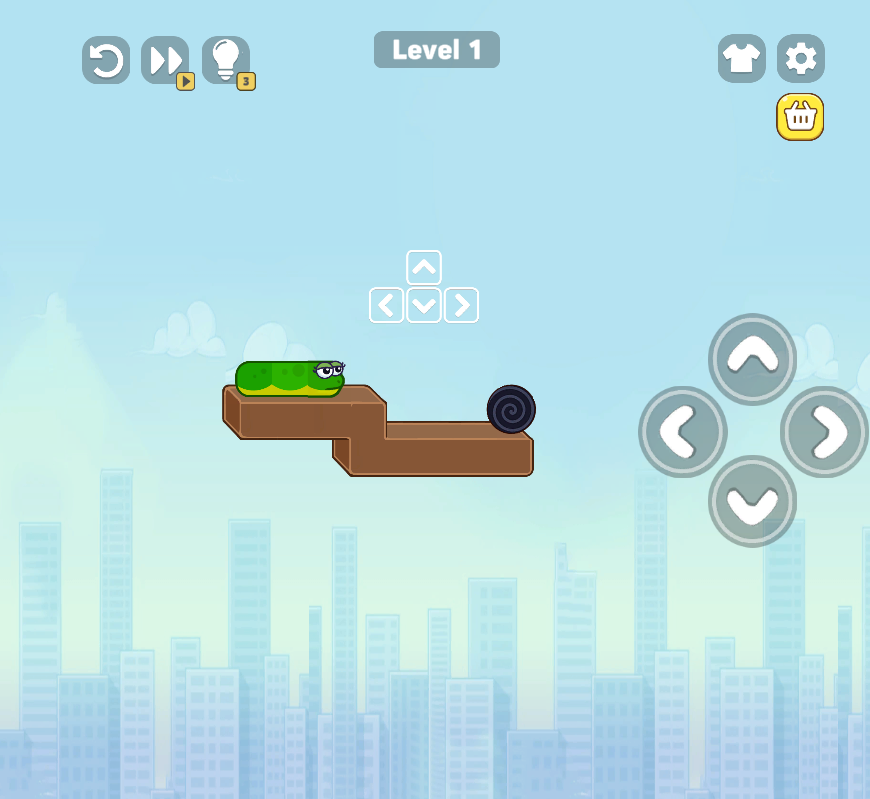
Getting started with Snake Puzzle: Slither to Eat! is straightforward, yet mastering it requires practice. The game typically begins with a small snake on a grid-based board, where your goal is to guide it to eat food items, causing it to grow longer. With each consumption, the snake expands, increasing the challenge as you must navigate tighter spaces without hitting boundaries or yourself. Controls are simple—often using arrow keys or swipe gestures—but the real depth lies in planning your moves. Unlike traditional snake games, this puzzle version incorporates elements like blocked cells, teleporters, and bonus items that add layers of strategy.
To excel at Snake Puzzle: Slither to Eat!, focus on slow, deliberate movements rather than rushed actions. Start by scanning the board for food clusters and plotting a safe path that minimizes risk. As the snake grows, leave escape routes open to avoid trapping yourself. This brain game emphasizes proactive thinking; for instance, you might need to sacrifice short-term gains for long-term survival. The puzzle aspects often involve solving specific objectives, such as reaching a target length within a move limit, which trains your problem-solving skills. By practicing regularly, you'll develop instincts that translate to better performance in other brain games and real-world scenarios.
Cognitive Benefits of Playing Snake Puzzle: Slither to Eat!
Engaging with Snake Puzzle: Slither to Eat! offers numerous cognitive benefits, making it a valuable addition to any brain training regimen. Firstly, it enhances spatial awareness by requiring you to mentally map the grid and predict movements. This skill is crucial in fields like mathematics, engineering, and even everyday tasks like driving. Secondly, the game boosts working memory, as you must remember the snake's tail positions and item locations to avoid collisions. Studies show that regular play can improve memory retention and processing speed, contributing to overall brain health.
Moreover, Snake Puzzle: Slither to Eat! fosters executive functions such as planning and inhibition control. You learn to resist impulsive moves and instead devise strategies, which can help in managing stress and making informed decisions. As a brain game, it also promotes neuroplasticity—the brain's ability to form new connections—by presenting novel challenges that keep your mind adaptable. For older adults, puzzles like Snake Puzzle: Slither to Eat! may delay cognitive decline, while for children, they can develop foundational logic skills. The game's engaging nature ensures that these benefits are gained enjoyably, without feeling like a chore.
Advanced Strategies for Mastering Snake Puzzle: Slither to Eat!
To truly dominate Snake Puzzle: Slither to Eat!, advanced strategies are essential. One key tactic is the "cornering technique," where you maneuver the snake along the edges to control its growth and minimize dead ends. This approach requires patience and precision, as miscalculations can lead to quick game overs. Another strategy involves "food management"—prioritizing which items to eat based on their placement and the snake's current length. In later levels, you might encounter power-ups that temporarily increase speed or invincibility; use these sparingly to overcome tough spots without compromising long-term goals.
Additionally, practice pattern recognition to anticipate board layouts. Many puzzles in Snake Puzzle: Slither to Eat! follow repetitive structures, so learning these can give you an edge. For example, some levels feature symmetrical designs where mirroring your movements on both sides yields success. As a brain game, it encourages analytical thinking; take notes on failed attempts to identify common pitfalls. Collaborating with other players online can also reveal new strategies, making the experience social and educational. Remember, consistency is key—regular play hones your skills, turning complex puzzles into manageable challenges.
Comparing Snake Puzzle: Slither to Eat! with Other Brain Games
Snake Puzzle: Slither to Eat! stands out in the crowded brain games market due to its unique blend of action and puzzle-solving. To illustrate, here's a table comparing it to other popular brain games, highlighting its distinctive features.
| Game Name | Primary Skill Targeted | Complexity Level | Unique Aspect |
| Snake Puzzle: Slither to Eat! | Spatial reasoning, strategy | Medium to high | Integrates classic snake mechanics with puzzle objectives |
| Sudoku | Logical deduction, number skills | Low to high | Focuses on grid-based number placement without time pressure |
| Chess | Strategic planning, memory | High | Turn-based with deep tactical depth and historical significance |
| Memory Match Games | Short-term memory, concentration | Low to medium | Relies on recalling card positions in a simple format |
| Snake Puzzle: Slither to Eat! | Reflexes, adaptability | Variable based on level design | Offers real-time action combined with brain-teasing puzzles |
As shown, Snake Puzzle: Slither to Eat! excels in targeting multiple cognitive domains simultaneously, making it a versatile brain game. While Sudoku hones logic and Chess emphasizes long-term strategy, this puzzle adds a dynamic element with time-sensitive decisions. This comparison underscores why Snake Puzzle: Slither to Eat! is ideal for those seeking a comprehensive mental workout. Its adaptability means you can play quick sessions or delve into complex levels, catering to diverse preferences. By incorporating such games into your routine, you can build a well-rounded cognitive toolkit.
The Role of Snake Puzzle: Slither to Eat! in Modern Brain Training
In today's fast-paced world, brain training has gained prominence as a way to maintain mental fitness, and Snake Puzzle: Slither to Eat! fits perfectly into this trend. Unlike passive entertainment, this game demands active participation, stimulating neural pathways associated with learning and memory. Apps and platforms often recommend puzzles like Snake Puzzle: Slither to Eat! for daily exercises, citing their effectiveness in improving focus and reducing mental fog. The game's progressive difficulty ensures continuous challenge, preventing plateauing and encouraging growth.
Furthermore, Snake Puzzle: Slither to Eat! can be integrated into educational contexts, helping students develop critical thinking in a playful manner. Teachers might use it to illustrate concepts like geometry or algorithms, making abstract ideas tangible. As a brain game, it also promotes digital literacy, as players navigate interfaces and adapt to updates. The social aspect shouldn't be overlooked—sharing high scores or competing with friends adds a motivational layer. Overall, Snake Puzzle: Slither to Eat! represents a fusion of entertainment and self-improvement, aligning with the growing demand for meaningful gaming experiences.
Why You Should Play Snake Puzzle: Slither to Eat! Today
If you're looking for a brain game that combines nostalgia with innovation, Snake Puzzle: Slither to Eat! is a must-try. Its engaging gameplay not only provides fun but also delivers tangible cognitive benefits, from sharper reflexes to better planning abilities. To experience it firsthand, visit MindPlayHub's Snake Puzzle: Slither to Eat! page, where you can play online or download it for various devices. This internal resource offers tips, updates, and community features to enhance your journey. By diving into Snake Puzzle: Slither to Eat!, you join a global community of puzzle enthusiasts dedicated to mental agility.
Moreover, playing Snake Puzzle: Slither to Eat! regularly can become a healthy habit, replacing less productive screen time with active brain engagement. Set daily goals, such as completing a certain number of levels, to track your progress. The game's accessibility means you can play during breaks, commutes, or leisure time, making it easy to incorporate into a busy schedule. As you improve, you'll notice enhanced problem-solving skills in other areas of life, proving that brain games like Snake Puzzle: Slither to Eat! have real-world applications. Don't wait—start slithering and eating your way to a smarter you!
Conclusion: Embracing the Challenge of Snake Puzzle: Slither to Eat!
In conclusion, Snake Puzzle: Slither to Eat! is more than just a game; it's a powerful brain tool that entertains while educating. From its roots in the classic snake genre to its modern puzzle adaptations, it offers a rich experience for players of all ages. By emphasizing strategy, spatial reasoning, and adaptability, this brain game stands as a testament to the evolving world of cognitive training. Whether you're a casual gamer or a serious puzzle solver, Snake Puzzle: Slither to Eat! promises hours of challenge and reward. So, take the plunge, sharpen your mind, and discover why this puzzle has captivated so many. Remember, every move counts in Snake Puzzle: Slither to Eat!—slither smartly, eat wisely, and enjoy the mental boost!
FAQ
- Question: What specific cognitive skills does 'Snake Puzzle: Slither to Eat!' help develop?
Answer: 'Snake Puzzle: Slither to Eat!' primarily targets spatial reasoning and strategic planning skills. As players navigate the snake through increasingly complex mazes to consume food while avoiding obstacles and its own growing tail, they must mentally rotate pathways, anticipate spatial consequences several moves ahead, and optimize routes. This continuous spatial manipulation strengthens neural pathways associated with mental visualization and geometric thinking, which are transferable to real-world tasks like packing, navigation, and understanding diagrams. The game's puzzle mechanics specifically challenge working memory as players must hold the snake's ever-changing length and position in mind while calculating future moves. - Question: How does the game's puzzle format differ from classic Snake in training executive functions?
Answer: Unlike classic Snake's reactive arcade gameplay, 'Snake Puzzle: Slither to Eat!' employs turn-based puzzle levels that emphasize deliberate executive function training. Each level presents a confined puzzle board where players must plan the entire sequence of moves before execution, requiring inhibition of impulsive responses and systematic problem-solving. This format specifically exercises cognitive flexibility—players must adapt strategies when initial plans fail and shift between different solution approaches. The puzzle constraints force prefrontal cortex engagement for goal management and error correction, making it more targeted for cognitive training than the pattern-memorization of traditional Snake. - Question: Can playing this game actually improve real-world problem-solving abilities?
Answer: Yes, 'Snake Puzzle: Slither to Eat!' cultivates transferable problem-solving frameworks through its structured challenges. The game teaches systematic decomposition—breaking complex maze navigation into manageable movement sequences—a strategy applicable to multistep real-world problems. Players develop pattern recognition for efficient pathfinding and learn to identify dead ends early, mirroring real-life troubleshooting skills. Regular engagement strengthens cognitive processes for evaluating alternatives and anticipating chain reactions, which can enhance performance in logistical planning, project management, and strategic decision-making scenarios outside the game environment. - Question: What makes this game effective for working memory training compared to other brain games?
Answer: The game's unique mechanics provide dynamic working memory loading through its growing snake mechanic. Unlike static memory games, 'Snake Puzzle: Slither to Eat!' requires players to continuously update and maintain multiple changing variables: the snake's exact length, occupied squares, food locations, and available pathways—all while planning future moves. This simultaneous tracking and manipulation of spatial information creates what cognitive scientists call 'complex span' training, which is particularly effective for strengthening working memory capacity. The increasing puzzle complexity provides graduated challenge that prevents automaticity, ensuring cognitive engagement remains high for optimal training effects. - Question: How does the 'slither to eat' mechanic specifically benefit cognitive flexibility?
Answer: The core 'slither to eat' mechanic—where the snake grows with each consumed food item—creates constantly evolving constraints that demand cognitive flexibility. Players must continuously adapt their navigation strategies as the snake's increased length reduces available space and creates new obstacles from its own body. This requires mental set-shifting between different solution approaches (e.g., from perimeter navigation to interior spiraling) and overcoming functional fixedness regarding the snake's tail as merely an obstacle versus a potential tool. Such flexible thinking under changing conditions trains the brain to abandon ineffective strategies and generate alternative solutions, a skill valuable in dynamic real-world situations. - Question: What practical insights from cognitive science are embedded in the game's level design?
Answer: The level design incorporates spaced repetition and desirable difficulty principles from cognitive science. Early levels establish fundamental movement patterns through repetition with slight variations, promoting procedural memory consolidation. Subsequent levels introduce interleaved challenges that mix different puzzle types to prevent rote memorization and encourage adaptive application of skills. The difficulty progression follows the 'zone of proximal development'—challenges are just beyond current ability but achievable with focused effort, maximizing cognitive engagement. This structured approach mirrors effective learning methodologies, making the game not just entertaining but a scientifically-informed tool for gradual cognitive skill building through deliberate practice.