
 Loading...
Russian Solitaire: A Deep Dive into the Classic Brain Game of Strategy and Patience
In the vast and varied world of card games, solitaire stands as a timeless monument to solo strategic play. Among its many fascinating variants, Russian Solitaire emerges as a particularly engaging and challenging iteration. More than just a way to pass the time, this game is a true brain game, demanding foresight, tactical planning, and a calm, analytical mind. Unlike the more common Klondike, Russian Solitaire presents a unique tableau and a different set of rules that will test even seasoned card game enthusiasts. This long-form guide will explore everything you need to know about Russian Solitaire, from its fundamental rules and winning strategies to the cognitive benefits it provides, solidifying its place as a premier puzzle for the mind.
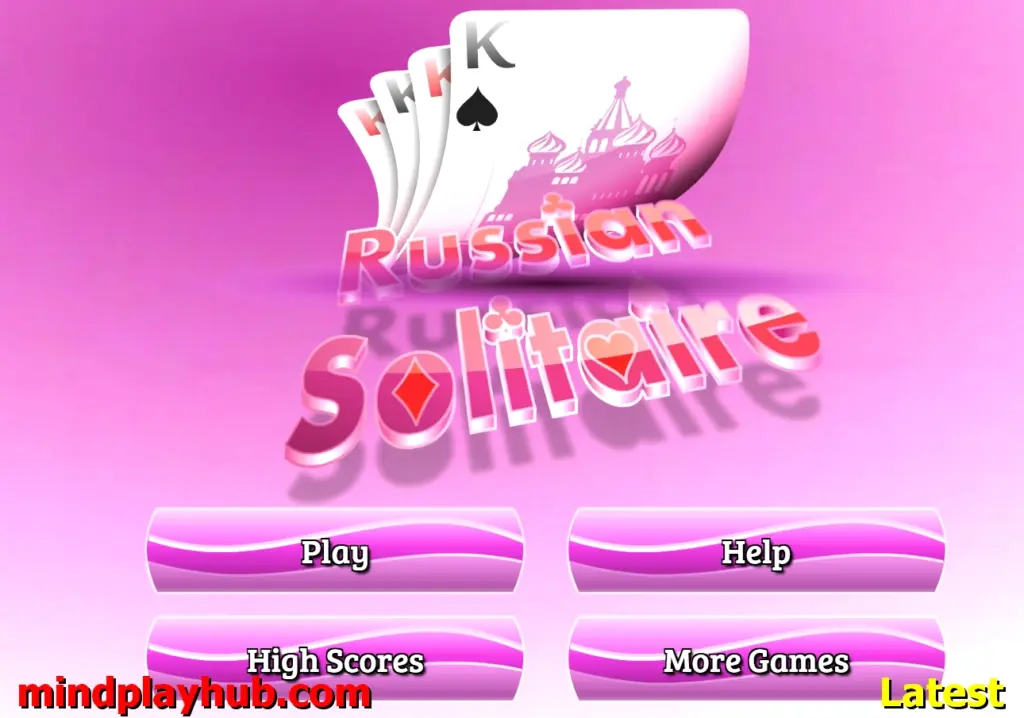
What is Russian Solitaire? Understanding the Foundation
At its core, Russian Solitaire is a patience game played with a single standard 52-card deck. The objective, like many solitaire games, is to build all cards onto the foundation piles, sorted by suit and in ascending order. However, the layout and the mechanics of movement distinguish it. The game is played with a tableau of several columns, and the strategic depth comes from the specific way cards can be moved and built upon each other. Mastering Russian Solitaire requires understanding not just the immediate move, but planning several steps ahead, visualizing the cascade of possibilities each decision unlocks. It's this demand for advanced planning that cements its status as an exceptional brain game.
A Brief Historical Context of Russian Solitaire
While the exact origins of many solitaire games are shrouded in history, Russian Solitaire is believed to have gained its name and popularity in Eastern Europe. Patience games have been a pastime for centuries across the continent, often used for both entertainment and fortune-telling. The structured, methodical nature of Russian Solitaire reflects a puzzle-solving tradition. Unlike games of pure chance, this variant emphasizes control and skill, a quality that has ensured its survival and digital translation into the modern era. Today, it remains a favorite for those seeking a substantive card-based challenge beyond the standard offerings.
Setting Up the Game: The Initial Tableau
The first step to engaging with this brain game is a proper setup. You begin with one standard deck of 52 cards, shuffled thoroughly. The initial tableau for Russian Solitaire is typically laid out as follows:
- Deal a row of nine cards face up in a horizontal line. This forms the bases of your nine tableau columns.
- Below each of these nine cards, deal another card face up, but only for the first eight columns (from left to right). You now have columns of varying lengths.
- Continue this pattern: deal another face-up card to the first seven columns, then six, and so on, decreasing by one column each round.
- The result is a triangular-shaped tableau where the first column has one card, the second has two, the third has three, up to the ninth column which has nine cards. All cards are face-up, providing full information—a key feature that makes strategic planning possible.
- The remaining cards form the stock pile, which will be used during play.
The Core Rules and Objectives of Russian Solitaire
The primary goal in Russian Solitaire is to build all four suits onto their foundation piles. Foundations are built up in ascending order from Ace to King. The game starts with any Aces that are exposed (at the bottom of any tableau column) being moved to a foundation row above the tableau. Once an Ace is in place, the corresponding 2, then 3, and so on of that suit can be added as they become available.
Movement within the tableau is governed by specific rules:
- Building on Tableau Columns: Within the tableau, you can build cards in descending order and in alternating colors (red on black, black on red). This is similar to Klondike. For example, a black 8 can be placed on a red 9.
- Moving Sequences: You can move entire sequences of correctly ordered and colored cards as a unit from one column to another.
- Exposing Cards: When you move a card or sequence, the card now at the bottom of the column it was taken from is turned face up (though in the standard setup, all cards start face-up). The key is that an empty column in the tableau can only be filled by a King, or a sequence headed by a King.
- Using the Stock Pile: When no more moves are available on the tableau, you turn over cards from the stock pile, usually in groups of one or three, depending on the specific rule set you're playing. You can only play the top card of the waste pile (the cards turned over from the stock) onto the foundations or the tableau.
For a definitive and detailed breakdown of the official rules, including minor variations, we recommend this excellent external resource: The Official Rules of Russian Solitaire.
Strategic Insights for Winning at Russian Solitaire
Winning a game of Russian Solitaire consistently requires more than just knowing the rules; it demands a strategic mindset. Here are key tactics to elevate your play in this compelling brain game:
1. Prioritize Uncovering Hidden Cards (in the Stock)
While the tableau starts face-up, your primary bottleneck is the stock pile. Your overarching strategy should focus on creating moves that allow you to cycle through the stock efficiently. Every card you can move from the waste pile to the tableau or foundations is progress.
2. Manage Your Empty Columns Wisely
An empty tableau column is a powerful asset, but only if used correctly. Remember, it can only be filled with a King or a King-led sequence. Don't be too quick to create an empty column unless you have a King (or a sequence you can break to free a King) ready to place there. A strategically held empty column can be used to rearrange long sequences and access buried cards.
3. Build Foundations Strategically, Not Automatically
It's often tempting to move a card to the foundation as soon as it's available. However, in Russian Solitaire, holding a low card in the tableau can be more valuable. That 2 of Hearts might be needed to anchor a descending sequence (e.g., Ace-2 of different colors). Prematurely moving cards to the foundation can sometimes "lock" the tableau and limit your movement options. Always ask: "Is this card more useful to me on the foundation or in the tableau right now?"
4. Plan Your Sequence Moves Several Steps Ahead
Before moving a long sequence from one column to another, visualize the new layout. What card will be uncovered in the source column? Does the move create a new, longer sequence that can be moved later? Does it block access to a needed card? The face-up nature of Russian Solitaire allows for this deep calculation, which is the hallmark of a great brain game.
5. Suit Prioritization and Color Balancing
Pay attention to the color and suit distribution in your tableau. If you have many red cards stacked together, you may need to free up a black card to continue building. Sometimes, it's beneficial to build a foundation for one suit more quickly to free up cards of the opposite color that are buried beneath its lower cards.
| Common Mistake | Strategic Correction | Benefit |
| Moving every card to foundation immediately. | Delay foundation builds to retain useful low cards in the tableau. | Maintains flexibility for building descending sequences. |
| Creating an empty column without a King available. | Only create an empty column when you have a King (or can free one) to place there. | Preserves a powerful strategic asset for major reorganizations. |
| Only focusing on the current top waste card. | Plan tableau moves specifically to play buried waste cards or cycle the stock. | Increases access to the entire deck, raising win probability. |
| Ignoring the long-term sequence consequences. | Analyze the state of both source and destination columns before moving a sequence. | Prevents creating deadlocks and uncovers more valuable cards. |
Why Russian Solitaire is a Superior Brain Game
The cognitive benefits of playing Russian Solitaire extend far beyond simple entertainment. Engaging with this game regularly provides a robust mental workout:
- Enhanced Problem-Solving Skills: Each game is a complex puzzle. You must identify patterns, weigh options, and devise a multi-step plan to achieve the goal, strengthening your analytical and logical reasoning abilities.
- Improved Memory and Concentration: Tracking cards that have been played, remembering the order in the stock, and holding your strategic plan in mind requires sustained focus and working memory.
- Development of Patience and Foresight: The "patience" in "patience game" is literal. Russian Solitaire teaches delayed gratification and the value of planning ahead, as rash moves often lead to unwinnable states.
- Stress Reduction through Flow State: The immersive nature of the game can induce a state of "flow," where you are fully engaged in a challenging yet achievable task. This can lower stress levels and provide a healthy mental break.
- Visual-Spatial Reasoning: Manipulating the cards, sequences, and empty spaces exercises your brain's ability to visualize objects and their relationships in space.
Comparing Russian Solitaire to Other Popular Solitaire Variants
To appreciate the unique position of Russian Solitaire, it helps to compare it to other well-known forms of solitaire. Klondike, the most famous variant, involves more face-down cards initially, introducing a greater element of chance. Spider Solitaire uses two decks and is generally considered more complex. FreeCell, while entirely open-information like Russian Solitaire, provides designated "free cells" for temporary card holding, changing the strategic calculus. Russian Solitaire occupies a perfect middle ground: it offers complete information from the tableau start, reducing luck, but its strict rules on empty columns and stock usage create a distinct and satisfying strategic challenge. It is less complex than Spider but offers more strategic depth than classic Klondike, making it an ideal brain game for those looking to level up.
Digital Adaptations and Where to Play Russian Solitaire Today
The digital age has been a boon for solitaire games. Russian Solitaire can be found on numerous websites and in mobile app stores. Digital versions offer advantages like automatic setup, undo functions (great for learning), instant scoring, and sometimes daily challenges. When choosing a platform, look for one that allows you to adjust settings like draw count from the stock (one or three cards at a time) to match your preferred difficulty. The convenience of digital play means you can enjoy a quick, mentally stimulating session of Russian Solitaire anytime, anywhere, turning a spare 10 minutes into a beneficial brain workout.
Beyond Cards: The Broader World of Brain Games
If you enjoy the logical planning and pattern recognition of Russian Solitaire, your journey into cognitive training doesn't have to stop there. The world of brain games is rich and varied. Classic puzzles like Sudoku and crosswords train logical deduction and verbal recall. Modern digital brain training apps offer suites of games targeting specific cognitive skills. Even other card and tile games provide similar benefits. For instance, if you appreciate the structured, pattern-matching challenge of solitaire, you might also enjoy the tile-matching strategy of a game like Daily Solitaire Mahjong Classic, which combines familiar solitaire goals with the intricate tile sets of Mahjong for a fresh mental challenge.
Conclusion: Embracing the Challenge of Russian Solitaire
Russian Solitaire is far more than a simple card game. It is a meticulously designed brain game that rewards patience, strategic foresight, and careful analysis. Its unique setup and rules create a captivating puzzle that stands apart from more common solitaire variants. Whether you are a seasoned card player looking for a new challenge or someone seeking a productive way to sharpen your mind, Russian Solitaire offers a deeply satisfying experience. By understanding its rules, applying the strategies outlined, and appreciating the mental gymnastics it requires, you unlock not just a higher win rate, but also a valuable tool for cognitive maintenance and growth. So shuffle the deck, lay out the tableau, and immerse yourself in the classic, enduring challenge of Russian Solitaire.
FAQ
- Question: How does Russian Solitaire specifically improve working memory compared to other brain games?
Answer: Russian Solitaire challenges working memory by requiring players to track multiple card sequences simultaneously while planning several moves ahead. Unlike simpler matching games, this variant demands constant updating of mental representations as new cards are revealed and sequences shift, exercising the brain's ability to hold and manipulate information in real-time. Regular play strengthens neural pathways associated with working memory, which translates to improved performance in daily tasks requiring multitasking and information retention. - Question: What executive functions are most engaged when playing Russian Solitaire?
Answer: Russian Solitaire is a powerful workout for core executive functions, particularly cognitive flexibility, planning, and inhibitory control. Players must continuously adapt their strategy based on new card layouts (flexibility), sequence moves to clear the tableau efficiently (planning), and resist impulsive moves that might block future options (inhibition). This structured decision-making process mirrors real-world problem-solving, helping to sharpen the brain's command center for managing complex tasks and goals. - Question: Can playing Russian Solitaire help with attention and concentration?
Answer: Yes, Russian Solitaire demands sustained and selective attention, training the brain to maintain focus on a complex task while filtering out distractions. The game requires players to scan the entire tableau, identify patterns, and calculate sequences, which exercises the brain's attentional networks. Regular engagement can help improve the ability to concentrate during other activities that require prolonged mental effort, making it a valuable tool for strengthening overall attentional control. - Question: What makes Russian Solitaire a good game for strategic thinking and problem-solving?
Answer: Russian Solitaire fosters strategic thinking by presenting a dynamic puzzle where each move has cascading consequences. Players must evaluate multiple potential sequences, anticipate outcomes several steps ahead, and often choose between short-term gains and long-term strategy. This iterative process of hypothesis testing and adaptation strengthens problem-solving circuits in the brain, enhancing the ability to approach complex, multi-step challenges in both gaming and real-life contexts with a more structured and analytical mindset. - Question: How does the specific rule set of Russian Solitaire challenge pattern recognition skills?
Answer: The unique tableau and sequencing rules of Russian Solitaire require players to recognize and utilize complex patterns beyond simple ascending or descending orders. Success depends on quickly identifying potential card groupings, suit alternations, and spatial relationships across the layout. This constant pattern-matching exercise trains the brain's visual-spatial and logical reasoning centers, improving the speed and accuracy with which one can identify meaningful patterns in data, a skill applicable to fields ranging from data analysis to everyday decision-making. - Question: What practical cognitive benefits can players expect from regular sessions of Russian Solitaire?
Answer: Regular players of Russian Solitaire can expect practical benefits in mental agility, including faster information processing, improved planning in daily tasks, and enhanced patience for working through complex problems. The game's requirement to hold multiple variables in mind and pivot strategies translates directly to better management of overlapping projects or responsibilities. By providing a structured yet variable cognitive challenge, it helps maintain neural plasticity, potentially contributing to long-term cognitive resilience as part of a balanced brain-training regimen.