

 Loading...

Ride the Bus Game
Welcome to the ultimate guide on the ride the bus game, a captivating brain game that blends strategy, memory, and a touch of luck. Often associated with social gatherings and drinking scenarios, this game is much more than just a pastime; it's a mental workout that challenges your cognitive abilities. In this comprehensive article, we'll delve deep into every aspect of the ride the bus game, from its origins and rules to advanced strategies and why it qualifies as a brain game. Whether you're a seasoned player or a curious newcomer, you'll find valuable insights to enhance your gameplay. So, buckle up as we explore the intricacies of this engaging activity.
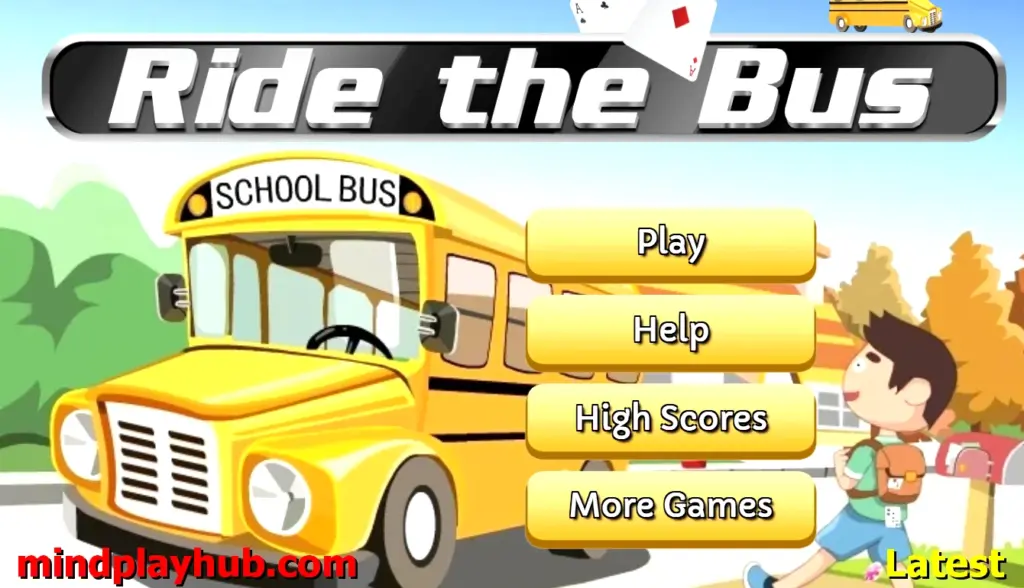
What is the Ride the Bus Game?
The ride the bus game is a popular card-based game that typically involves predicting card outcomes in a sequence. While it's commonly played as a drinking game, its core mechanics rely on logical deduction, probability assessment, and memory, making it an excellent brain game. Players must navigate through a series of questions or predictions about cards drawn from a standard deck, with mistakes leading to penalties—often drinks in social settings, but in a brain game context, these can be point deductions or other non-alcoholic consequences. The objective is to "ride the bus" successfully by answering all predictions correctly without errors, which requires sharp mental focus. Understanding the ride the bus game as a brain game highlights its potential to improve cognitive skills like attention, pattern recognition, and decision-making under pressure.
Origins and History of Ride the Bus
The exact origins of the ride the bus game are murky, but it's believed to have evolved from traditional drinking games in Western cultures, particularly in college and party scenes. Over time, it has been adapted into a sober version for those interested in mental challenges. As a brain game, it draws inspiration from classic card games like "Higher or Lower" and memory games, where players test their ability to recall sequences and make predictions. The ride the bus game gained popularity due to its simple setup—requiring only a deck of cards—and its engaging, step-by-step progression that keeps players on their toes. Today, it's celebrated not just for entertainment but also as a tool for cognitive enhancement, fitting neatly into the category of brain games that stimulate mental agility.
Why Ride the Bus is Considered a Brain Game
Brain games are activities designed to challenge and improve cognitive functions such as memory, problem-solving, and critical thinking. The ride the bus game excels in this area because it demands constant mental engagement. Players must remember previous card outcomes, calculate probabilities for future draws, and make quick decisions based on limited information. This process activates multiple brain regions, including the prefrontal cortex for decision-making and the hippocampus for memory. Unlike passive entertainment, the ride the bus game requires active participation, making it an effective brain exercise. Studies suggest that regular engagement in such games can help maintain cognitive health, potentially delaying age-related decline. Thus, incorporating the ride the bus game into your routine can be both fun and beneficial for your mind.
Essential Rules and How to Play Ride the Bus
To play the ride the bus game, you need a standard 52-card deck and at least two players. The game consists of four distinct stages, each with increasing difficulty. Here's a step-by-step breakdown of the rules, which you can also reference from detailed external sources like this comprehensive guide on ride the bus rules. Note that in a brain game context, penalties can be adapted to points or timeouts instead of drinks.
Stage 1: The Questions
In the first stage, the dealer asks each player a series of four questions about the cards. These questions are typically: "Will the next card be red or black?", "Will it be higher or lower than the previous card?", "Will it be inside or outside the range of the last two cards?", and "What suit will it be?" Players must answer correctly to advance. Mistakes result in penalties, and the player must restart the stage. This phase tests color recognition, numerical comparison, and suit memory, making the ride the bus game a rigorous brain exercise.
Stage 2: The Pyramid
The second stage involves a pyramid layout of cards, where players predict outcomes for each row. Six cards are dealt face down in a pyramid shape (one card on top, two below, three at the base). Players guess whether each card is red or black, with correct guesses allowing them to move down the pyramid. Errors force players to drink or take penalties, emphasizing risk assessment and probability calculation—key skills in brain games.
Stage 3: The Categories
Here, players must name cards that fit into specific categories, such as "all hearts" or "cards below 5". This stage challenges verbal fluency and categorical thinking, akin to other brain games that focus on mental flexibility. The ride the bus game thus becomes a multitasking challenge, requiring players to juggle multiple cognitive demands simultaneously.
Stage 4: The Ride
The final stage is where players literally "ride the bus". They must guess the exact value and suit of the next card drawn. Success means winning the game, while failure leads to significant penalties. This stage tests precise memory and deduction, crowning the ride the bus game as a comprehensive brain game that hones accuracy and focus.
| Stage | Description | Cognitive Skills Tested |
| 1: Questions | Answer predictions about card color, value, range, and suit. | Memory, Comparison, Pattern Recognition |
| 2: Pyramid | Guess red or black for cards in a pyramid layout. | Probability, Risk Assessment |
| 3: Categories | Name cards fitting specific categories. | Verbal Fluency, Categorical Thinking |
| 4: The Ride | Predict exact card value and suit. | Precise Memory, Deduction |
This table summarizes how each stage of the ride the bus game targets different cognitive abilities, reinforcing its status as a brain game. By mastering these stages, players can enhance their mental agility, much like with other brain games such as Slice Master on Cool Math Games, which focuses on spatial reasoning and timing.
Cognitive Benefits of Playing Ride the Bus
Engaging in the ride the bus game offers numerous cognitive benefits, similar to those from dedicated brain training programs. Firstly, it improves working memory, as players must retain information about previous cards to make accurate predictions. Secondly, it enhances executive functions like planning and impulse control, since decisions must be made quickly under pressure. Thirdly, the ride the bus game boosts probabilistic thinking, teaching players to weigh odds and make informed guesses—a skill applicable in real-life scenarios like investing or problem-solving. Regularly playing this brain game can also increase attention span and reduce cognitive fatigue by providing structured mental stimulation. As part of a balanced brain game regimen, the ride the bus game complements activities that target other skills, ensuring comprehensive cognitive development.
Strategies to Master the Ride the Bus Game
To excel at the ride the bus game, players need more than luck; they require strategic thinking. Here are some proven strategies to elevate your gameplay and treat it as a serious brain game. Start by focusing on memory techniques: use mnemonic devices to remember card sequences, such as associating cards with vivid images. In the questions stage, pay close attention to patterns in red/black distribution—statistically, decks have equal red and black cards, but short-term streaks can occur. For the pyramid stage, adopt a conservative approach; if unsure, guess based on the most common outcomes to minimize errors. In categories, practice quick recall by familiarizing yourself with card values and suits beforehand. Finally, during the ride stage, use elimination based on previous cards to narrow down possibilities. Implementing these strategies transforms the ride the bus game from a casual pastime into a mentally enriching brain game, sharpening your cognitive tools with each session.
Variations and Adaptations of Ride the Bus
The ride the bus game is highly versatile, with numerous variations that cater to different preferences and settings. As a brain game, it can be modified to increase difficulty or focus on specific skills. For instance, a timed version adds pressure, enhancing speed-based cognitive processing. Another variation involves using multiple decks to complicate memory tasks, challenging players to track more information. Some adaptations replace drinking penalties with point systems, making it suitable for all ages and contexts, such as classrooms or team-building exercises. There's also a solo version where players compete against their own high scores, turning the ride the bus game into a self-improvement brain game. Exploring these variations keeps the game fresh and continuously challenges the brain, preventing plateauing in cognitive gains. Whether played traditionally or with twists, the ride the bus game remains a dynamic tool for mental exercise.
Comparing Ride the Bus to Other Brain Games
When placed alongside other brain games, the ride the bus game holds its own due to its unique blend of skills. Unlike puzzle games that focus solely on logic, or memory games that emphasize recall, the ride the bus game integrates multiple cognitive domains. For example, games like Sudoku enhance numerical reasoning, while the ride the bus game adds social interaction and real-time decision-making. Similarly, digital brain games such as Slice Master on Cool Math Games improve hand-eye coordination and spatial awareness, but the ride the bus game offers a tactile, card-based experience that can be more accessible without technology. This versatility makes the ride the bus game a valuable addition to any brain game repertoire, providing a well-rounded mental workout that complements specialized games.
Setting Up a Ride the Bus Brain Game Session
To host a successful ride the bus game session as a brain game, follow these steps for an optimal experience. First, gather a group of players interested in cognitive challenges—anywhere from 2 to 10 people works well. Use a standard deck of cards and clarify that penalties will be non-alcoholic, such as losing points or doing a quick brain teaser. Explain the rules clearly, perhaps referencing online rules for accuracy, and emphasize the brain game aspect by highlighting the cognitive skills tested. Set a time limit to keep sessions engaging, and consider keeping score to track improvement over time. Encourage discussions about strategies after each round to foster learning. By framing the ride the bus game as a brain game, you create an environment that promotes mental growth and social bonding, making it more than just entertainment.
Common Mistakes and How to Avoid Them
Even experienced players can falter in the ride the bus game, but recognizing common mistakes can help you improve. One frequent error is neglecting memory aids; in the heat of the game, players often forget previous cards, leading to incorrect predictions. To avoid this, practice active recall techniques or take mental notes. Another mistake is overcomplicating guesses; sometimes, the simplest probability (e.g., 50/50 for red/black) is the best approach, especially in early stages. Additionally, players may rush through stages without pausing to think, undermining the brain game benefits. Slow down and deliberate each decision. Finally, not adapting strategies based on game flow can be detrimental. Pay attention to patterns and adjust accordingly. By avoiding these pitfalls, you'll enhance your performance in the ride the bus game and maximize its cognitive rewards.
The Social and Psychological Aspects of Ride the Bus
Beyond cognitive benefits, the ride the bus game offers social and psychological advantages when played as a brain game. It fosters teamwork and communication, as players often discuss strategies or cheer each other on. This social interaction can reduce stress and improve mood, contributing to overall mental well-being. Psychologically, the game builds resilience by teaching players to handle failure gracefully—since mistakes are part of the learning process. The ride the bus game also boosts confidence as players master stages and see tangible progress. In group settings, it can break the ice and encourage camaraderie, making it an excellent activity for brain game clubs or family gatherings. By appreciating these broader impacts, you can leverage the ride the bus game not just for brain training but for holistic mental health.
Advanced Techniques for Ride the Bus Enthusiasts
For those deeply invested in the ride the bus game as a brain game, advanced techniques can take your skills to the next level. Consider learning card counting methods, similar to those used in blackjack, to track the distribution of high and low cards—this requires intense concentration and mathematical skill. Another technique is psychological profiling of opponents; in multiplayer versions, observing others' guessing patterns can give you an edge, honing your social cognition. You can also create custom variations that target specific cognitive weaknesses, such as adding more categories to challenge verbal memory. Practicing with distractions present can improve focus, simulating real-world conditions where concentration is key. By delving into these advanced aspects, the ride the bus game becomes a sophisticated brain game that continuously pushes your mental limits, ensuring ongoing cognitive development.
Integrating Ride the Bus into a Brain Training Routine
To make the most of the ride the bus game as a brain game, integrate it into a regular brain training routine. Schedule sessions weekly, alternating with other brain games to target different cognitive areas. For example, pair it with Slice Master on Cool Math Games for a mix of card-based strategy and digital spatial puzzles. Keep a journal to track your performance in the ride the bus game, noting improvements in speed and accuracy over time. Set specific goals, such as reducing errors in the pyramid stage or mastering the ride stage consistently. Incorporate mindfulness practices before playing to enhance focus. By treating the ride the bus game as a structured brain game, you'll see cumulative benefits in daily cognitive tasks, from better decision-making to improved memory recall.
Conclusion: Embracing Ride the Bus as a Brain Game
In conclusion, the ride the bus game is far more than a simple card game; it's a multifaceted brain game that offers extensive cognitive, social, and psychological benefits. From its engaging stages that test memory and probability to its adaptable variations, this game provides a robust mental workout suitable for all ages. By understanding its rules, employing strategies, and integrating it into a brain training regimen, you can harness the full potential of the ride the bus game. Whether played casually with friends or seriously as a cognitive exercise, it stands out as a valuable addition to the world of brain games. So, next time you gather for a game night, consider the ride the bus game—not just for fun, but for a sharper, more agile mind.
FAQ
- Question: What cognitive skills does 'Ride the Bus' primarily train?
Answer: 'Ride the Bus' is a strategic card game that primarily exercises working memory and fluid reasoning. Players must constantly track the sequence of cards, remember which cards have been played, and predict outcomes based on shifting probabilities. This continuous mental juggling act strengthens the brain's executive functions, which are crucial for planning, focus, and complex problem-solving in daily life. - Question: How does playing 'Ride the Bus' improve memory?
Answer: The game's core mechanic of predicting card sequences in a specific order provides an excellent workout for both short-term and episodic memory. Players must retain the rules of each stage, recall their previous predictions, and remember the cards that have already appeared to make informed future guesses. This repeated encoding and retrieval practice can enhance memory consolidation and recall speed, translating to better retention of information outside the game. - Question: Can 'Ride the Bus' help with decision-making under pressure?
Answer: Absolutely. 'Ride the Bus' simulates a low-stakes, high-engagement environment where players must make rapid, sequential decisions with imperfect information. Each prediction is a calculated risk, teaching players to weigh odds, manage uncertainty, and adapt their strategy after losses. This practice in probabilistic thinking and emotional regulation under pressure can build resilience and improve real-world decision-making when faced with ambiguous or stressful choices. - Question: What makes 'Ride the Bus' a good brain training game compared to other card games?
Answer: Unlike many card games focused on simple matching or luck, 'Ride the Bus' uniquely layers multiple cognitive challenges into a single, escalating format. It combines the memory demands of concentration games with the strategic forecasting of poker and the sequential logic of a puzzle. This multi-faceted approach ensures a broader range of neural pathways are engaged, promoting greater cognitive flexibility and integrated brain function than more one-dimensional games. - Question: How does the progressive structure of 'Ride the Bus' benefit learning and adaptability?
Answer: The game's structure, where players must successfully complete one stage to 'ride the bus' to the next, mirrors effective learning principles. It introduces complexity gradually, allowing the brain to master foundational skills before adding new rules. This scaffolded challenge promotes neuroplasticity by consistently pushing the brain just beyond its comfort zone, thereby enhancing the ability to learn new systems and adapt to changing rules or environments more efficiently. - Question: Are the cognitive benefits from playing 'Ride the Bus' transferable to daily life?
Answer: Yes, the skills honed in 'Ride the Bus' have direct real-world applications. The improved working memory aids in following multi-step instructions or holding a conversation in a noisy room. The enhanced probabilistic thinking supports better financial or logistical planning. Furthermore, the game trains cognitive flexibility—the ability to shift thinking strategies—which is vital for creative problem-solving and adapting to unexpected changes in personal or professional scenarios.