

 Loading...

Mahjong Garden
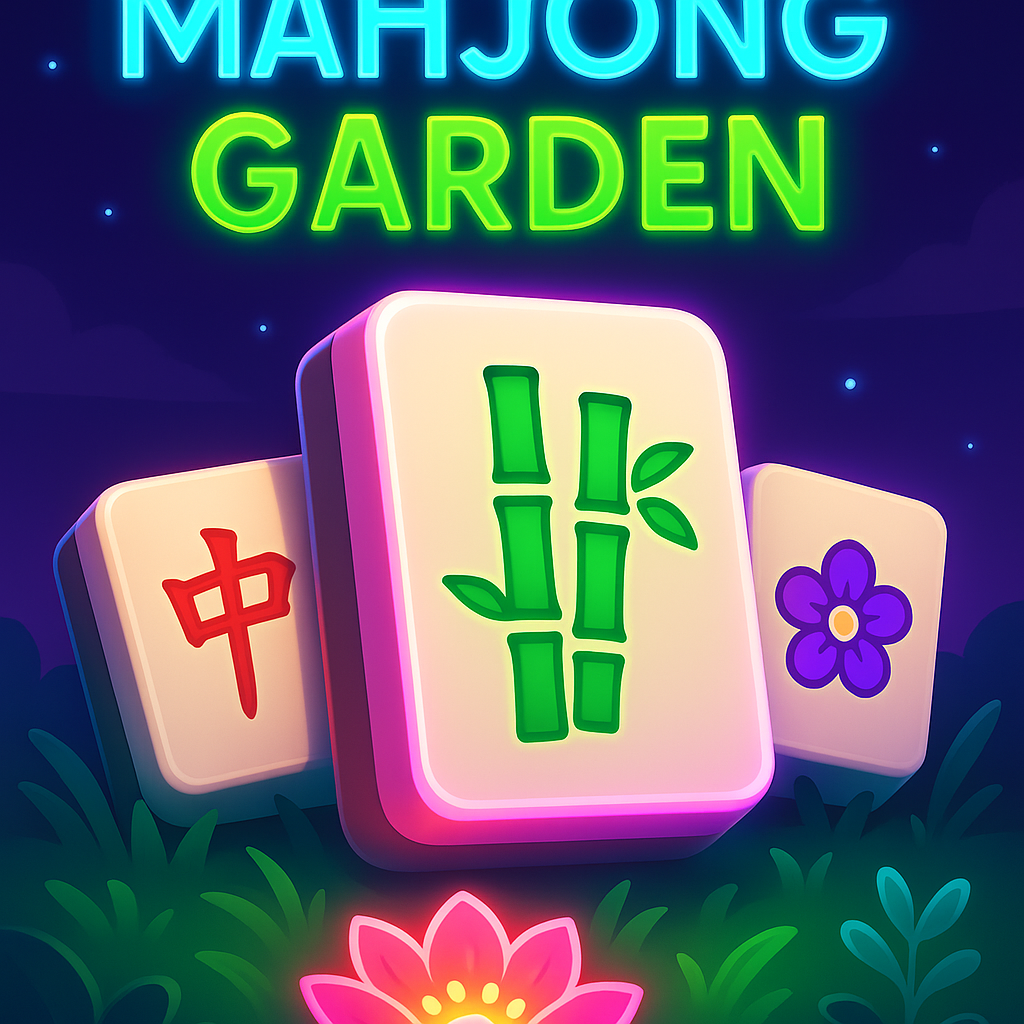
In the bustling digital landscape of mind games, Mahjong Garden stands out as a serene yet deeply engaging oasis. This tile-matching solitaire game, a digital descendant of the ancient Chinese game of Mahjong, offers more than just a way to pass the time. It presents a beautiful, calming environment where strategic thinking, pattern recognition, and memory are quietly cultivated. Unlike the competitive, four-player table game, Mahjong Garden is a solitary pursuit, a puzzle where the goal is to clear a meticulously arranged layout of ornate tiles by finding and matching identical free pairs. The "Garden" in its name is apt; playing it feels like tending to a digital Zen garden, where each matched pair is a step toward revealing a peaceful and orderly space. For enthusiasts of brain games, it represents a perfect blend of aesthetic pleasure and cognitive exercise, providing a rewarding challenge that grows with each level.
The Roots: From Ancient Tables to Digital Gardens
To fully appreciate Mahjong Garden, one must understand its illustrious ancestry. The game of Mahjong itself dates back to 19th century China, evolving from earlier card games. It is a game of skill, strategy, and calculation, often played by four players with a set of 144 tiles based on Chinese characters and symbols. This classic game traversed continents, captivating players worldwide with its rich iconography and complex rules.
The digital adaptation, known as Mahjong Solitaire or simply "Mahjong," was created in 1981 by Brodie Lockard. This single-player variant strips away the multiplayer betting and complex scoring, focusing instead on the simple, satisfying mechanic of matching and removing tiles from a pyramid or other structured layout. Mahjong Garden is a direct inheritor of this tradition, taking the core solitaire gameplay and placing it within lush, thematic backdrops. The transition from physical mahjong sets to digital screens has made the game more accessible than ever, allowing anyone to enjoy a moment of focused tranquility. The tactile click of polished bamboo and bone is replaced by the soft sound of virtual tiles sliding away, but the essential mental engagement remains powerfully intact.
Cultivating Your Skills: Core Gameplay Mechanics
At its heart, the gameplay of Mahjong Garden is elegantly simple, yet mastering it requires sharp observation and forward planning. The game begins with a screen filled with tiles stacked in multiple layers to form a specific shape, such as a turtle, a dragon, or a fortress. Each tile is adorned with one of several symbols—from Bamboo and Characters to Winds and Dragons, mirroring a traditional set.
The core rules are straightforward:
- Free Tiles: You can only select tiles that are "free." A tile is considered free if it is not covered by another tile and has at least one of its long sides (left or right) completely exposed.
- Matching Pairs: Your objective is to find and click on two identical free tiles. Once matched, they disappear from the layout.
- Clearing the Board: The ultimate goal is to remove every single tile from the layout. Successfully doing so completes the level, often revealing a beautiful background image.
- Obstacles: The strategic depth comes from the layered layout. Early moves can unlock crucial tiles below, but poor choices can block your path to a complete clear, forcing you to restart.
Unlike timed or pressured puzzle games, Mahjong Garden typically allows you to play at your own pace. This encourages thoughtful consideration of each move. The game often includes helpful features like a hint button, which highlights a possible match, and a shuffle button, which rearranges all the remaining free tiles when no moves are apparent (though sometimes at a score cost). These aids ensure the experience remains enjoyable rather than frustrating, making it perfect for both quick mental breaks and longer, more contemplative sessions.
Why Mahjong Garden is a Premier Brain Game
The category of "brain games" encompasses activities designed to stimulate cognitive functions. Mahjong Garden excels in this domain, offering a multifaceted mental workout under the guise of a beautiful, relaxing game.
1. Enhanced Visual Perception and Pattern Recognition
The primary skill exercised is visual scanning. Your eyes must constantly sweep across a complex, colorful array of symbols to identify not just matches, but accessible matches. This hones your ability to recognize patterns quickly and accurately—a skill transferable to many real-world tasks, from data analysis to finding items on a crowded shelf.
2. Strategic Planning and Foresight
Random matching will only get you so far. To consistently clear boards, you must think several moves ahead. Removing one pair might free up two desirable tiles, but it could also cover a third, essential tile with another layer. This necessity for foresight trains logical sequencing and strategic planning, engaging the prefrontal cortex responsible for executive function.
3. Improved Memory and Concentration
As you play, you naturally start to remember the locations of key tiles, especially those that become temporarily blocked. Holding the layout's structure in your working memory is crucial for planning your strategy. This constant engagement strengthens short-term memory and demands sustained concentration, pushing out distractions as you focus on the puzzle at hand.
4. Stress Reduction and Mindfulness
While not a "cognitive skill" in the traditional sense, the mental state fostered by Mahjong Garden is profoundly beneficial. The lack of a timer (in most modes), the soothing visuals, and the rhythmic action of matching tiles can induce a state of flow, where worries fade and the mind is fully present in the task. This mindful engagement is a proven method for reducing stress and anxiety, making the game a healthy mental habit.
| Cognitive Skill | How Mahjong Garden Develops It |
| Visual Processing | Rapid scanning of complex tile arrays to identify matching symbols and assess which tiles are free to move. |
| Strategic Thinking | Requiring players to plan multiple moves ahead to avoid dead ends and successfully clear the entire board. |
| Working Memory | Remembering the location of key tiles that are currently blocked but will become available later. |
| Sustained Attention | Maintaining focus on a single, detailed task for extended periods to find solutions. |
| Problem-Solving | Overcoming challenging layouts by analyzing the puzzle structure and testing different matching sequences. |
Blooming Strategies: Tips to Master the Garden
Moving from a casual player to a master of the Mahjong Garden requires adopting some key strategies. These approaches will help you tackle even the most daunting layouts.
Prioritize the Upper Layers
Your first instinct should be to clear tiles from the highest layers and those covering the most other tiles. Think of it as excavating a site—you need to remove the topsoil to get to the artifacts below. Freeing up the deeper layers early gives you more options and flexibility as the game progresses.
Create Matching Opportunities
Be mindful of creating pairs. If you see two identical tiles but one is buried, work to free that buried tile. Sometimes, the best move isn't the most obvious match, but the one that unlocks the possibility for several future matches.
Manage Your Tile Types
Pay attention to the quantity of each tile type. If you see you only have four "Red Dragon" tiles left, you know they form two perfect pairs. However, if you have an odd number of a certain tile, you've likely made an error, as all tiles should be in matching pairs. This numerical check can serve as a vital error detection system.
Use the Shuffle Wisely
The shuffle feature is a powerful tool, but don't rely on it as a first resort. Try to analyze the board thoroughly first. Use the shuffle when you are genuinely stuck and believe the remaining free tiles are preventing access to the layers beneath. It's a strategic reset, not a crutch.
The Digital Ecosystem: Features and Variations
Modern digital versions of Mahjong Garden, like the excellent implementation found on Simple.Game, come packed with features that enrich the experience. These platforms often offer hundreds of unique layouts, progressively increasing in difficulty. Themes may change—from a classic garden to underwater scenes or mystical temples—keeping the visuals fresh. Many versions include daily challenges, achievement systems, and multiple game modes, such as timed challenges for those seeking an extra adrenaline rush.
This digital ecosystem ensures that Mahjong Garden remains a perennial favorite. The ability to jump in for a single puzzle or lose yourself in a campaign of levels caters to all play styles. The seamless integration of these features within the calm framework of tile-matching is what makes the game so enduringly popular in the brain game genre.
Planting the Seeds for Long-Term Cognitive Health
Engaging regularly with games like Mahjong Garden is more than a hobby; it can be part of a proactive approach to maintaining cognitive fitness. Just as physical exercise strengthens the body, mental exercises strengthen neural pathways. The combination of memory, strategy, and perception required provides a balanced workout for the brain. For older adults, in particular, such games are often recommended to help maintain mental acuity and delay cognitive decline. For younger players, it serves as a disciplined break from social media's chaos, training the mind to focus deeply on a single, rewarding task.
Conclusion: Your Peaceful Cognitive Retreat Awaits
Mahjong Garden is far more than a simple matching game. It is a meticulously designed brain game that nurtures crucial cognitive skills within a framework of unparalleled tranquility. It connects us to a centuries-old tradition of tile-based play while leveraging modern digital design to provide an accessible, engaging, and infinitely replayable experience. Whether you are seeking to sharpen your mind, find a moment of daily mindfulness, or simply enjoy a beautiful and intelligent puzzle, the garden's gates are always open. Each game is a journey—a patient cultivation of focus and strategy that leaves you feeling both relaxed and mentally invigorated. So, take a deep breath, start scanning for those matching tiles, and discover the profound satisfaction that comes from bringing order to a beautifully chaotic digital landscape.
FAQ
- Question: What specific cognitive skills does playing Mahjong Garden help to train?
Answer: Mahjong Garden is an excellent tool for training several key cognitive skills, primarily through its core matching mechanic. The game robustly exercises visual perception and pattern recognition, as players must quickly identify matching tiles among a complex, layered garden layout. This process directly strengthens working memory, as you must hold the locations and identities of multiple tiles in mind while planning several moves ahead. Furthermore, the strategic element of clearing the board efficiently engages problem-solving and planning abilities, requiring you to consider the consequences of each match on future available moves. - Question: How can Mahjong Garden improve my memory and concentration?
Answer: Mahjong Garden demands sustained attention and active recall, making it a potent exercise for memory and concentration. The game's intricate, flower-filled layouts require you to concentrate deeply to track tile positions that become exposed or blocked with each move, training your selective attention to filter out visual clutter. This continuous updating of the board state in your mind is a workout for your short-term or working memory. Regularly engaging with these challenges can help enhance your mental stamina and your ability to maintain focus on complex tasks in daily life, as the brain adapts to the game's demands for detailed observation and recall. - Question: Does the relaxing theme of Mahjong Garden reduce its effectiveness as a brain-training game?
Answer: Not at all. The serene garden theme and calming music of Mahjong Garden are strategic assets that enhance its cognitive benefits by promoting an optimal state for learning and mental engagement. A relaxed, low-stress mindset reduces cognitive interference from anxiety, allowing for better focus, clearer strategic thinking, and improved information processing. This means you can engage the game's core challenges—like spatial reasoning and problem-solving—more deeply and for longer periods. The enjoyable, stress-free environment supports neuroplasticity, the brain's ability to reorganize and strengthen the neural pathways used during gameplay. - Question: What makes Mahjong Garden's tile-matching different from other puzzle games for brain health?
Answer: Mahjong Garden's unique contribution to brain training lies in its specific combination of a familiar matching mechanic with complex, multi-layered spatial puzzles. Unlike simple match-3 games, the classic Mahjong Solitaire format requires you to understand and navigate a three-dimensional spatial arrangement on a two-dimensional screen, honing your spatial visualization skills. The 'garden' layouts often feature organic, non-symmetrical shapes and dense tile stacks, which present novel and unpredictable problem-solving scenarios each time you play. This variability ensures your brain doesn't rely on routine but must actively adapt its strategy, providing a comprehensive workout for flexible thinking and adaptive reasoning. - Question: Can playing Mahjong Garden regularly help with mental agility or processing speed?
Answer: Yes, regular play can contribute to improved mental agility and processing speed. Mahjong Garden requires you to rapidly scan the board, identify matching pairs from a limited set of available moves, and execute decisions. This cycle of perception, decision, and action, performed under the soft pressure of completing the puzzle, trains your brain to process visual information more quickly and make efficient choices. Over time, this practice can help sharpen cognitive fluency, allowing you to assess situations and react more swiftly in other contexts. The game's various layouts and difficulty levels provide scalable challenges that continue to push your processing speed as your skills improve. - Question: How can I maximize the brain-training benefits while playing Mahjong Garden?
Answer: To maximize cognitive benefits, move beyond casual play and adopt a strategic mindset. Instead of making the first obvious match, pause to analyze the entire 'garden' layout. Plan several moves ahead to avoid trapping key tiles, which deeply engages executive functions like planning and foresight. Challenge yourself by using the hint feature sparingly, forcing your brain to work harder to find solutions. For an added boost, occasionally time your games to gently pressure your processing speed, or revisit completed layouts days later to test your memory of successful strategies. This intentional, mindful approach transforms the relaxing activity into a powerful and targeted cognitive workout.