

 Loading...

Eight Off: The Ultimate Brain Game for Strategic Thinkers
In the vast and engaging world of solitaire card games, Eight Off stands out as a true test of foresight, patience, and tactical planning. More than just a way to pass the time, Eight Off is a compelling brain game that challenges your cognitive abilities, requiring you to think several moves ahead and adapt your strategy on the fly. Unlike simpler variants of solitaire, Eight Off offers a unique and rewarding puzzle that has captivated card game enthusiasts for decades. This deep dive will explore everything you need to know about this fascinating game, from its foundational rules to advanced strategies that will sharpen your mind and elevate your play.
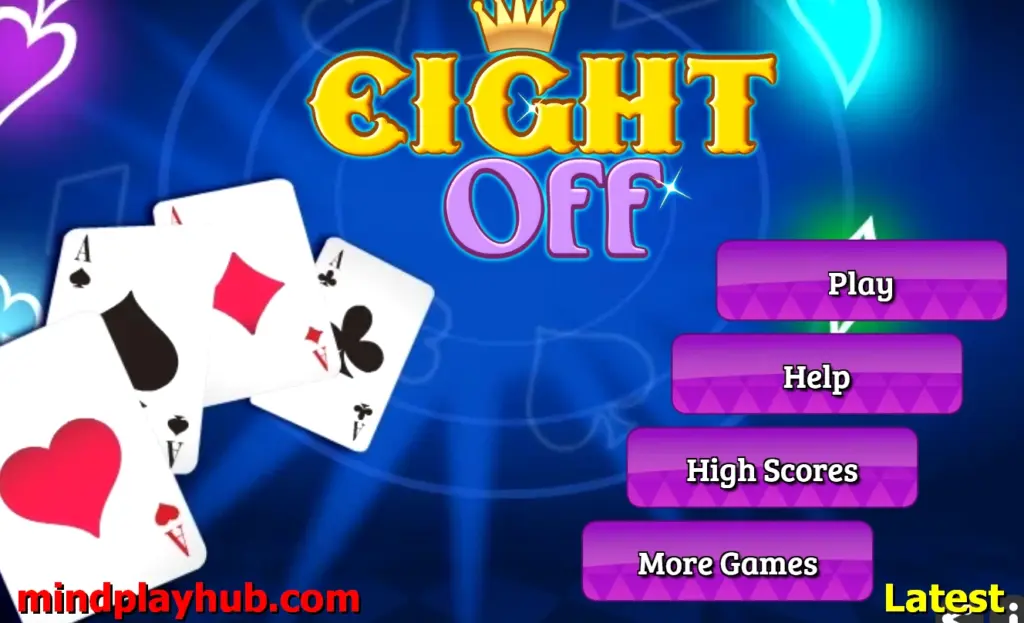
What is Eight Off Solitaire?
Eight Off is a solitaire game that shares some DNA with the more famous FreeCell, but it carves its own distinct niche. It is played with a single standard 52-card deck. The core objective is familiar: to build all cards onto the four foundation piles, sorted by suit in ascending order from Ace to King. Where Eight Off introduces its unique twist is in the layout and the management of space. The "eight off" in the name refers to the eight reserve cells (or "free cells") that are initially occupied, setting the stage for a complex and thoughtful game of spatial management and sequence building. This structure makes every decision consequential, transforming the game from a luck-based pastime into a genuine exercise in strategic thinking and problem-solving.
A Brief History of the Eight Off Game
The exact origins of Eight Off are somewhat obscure, as is the case with many classic card games. It is widely believed to have evolved alongside FreeCell in the mid-20th century, with both games gaining monumental popularity with their digital inclusion in operating systems like Microsoft Windows. The digital era transformed Eight Off Solitaire from a niche tabletop game into a globally accessible brain trainer. Its perfect balance of solvability and challenge made it an instant hit. Unlike purely luck-based games, a skilled player can win a high percentage of Eight Off deals, provided they employ sound logic and careful planning. This characteristic cemented its status not just as a game, but as a respected puzzle for the analytically minded.
How to Play Eight Off: Rules and Setup
Before you can master the strategy of the Eight Off game, you must understand its basic framework. The setup is crucial and defines the entire flow of play.
1. The Tableau: Deal eight columns of cards face-up. The first four columns contain seven cards each, and the last four columns contain six cards each. These 52 cards form the main playing area, known as the tableau.
2. The Foundations: Above the tableau, you have four empty foundation piles. The goal is to build each suit (Hearts, Diamonds, Clubs, Spades) from Ace to King on these foundations.
3. The Reserve (The "Eight Off"): This is the game's defining feature. Below or to the side of the tableau, you have eight "free cells." However, unlike FreeCell, these start occupied. At the beginning of the game, you will move one card from the bottom of each tableau column to fill these eight reserve cells. These cards are now available to be played at any time.
Basic Moves:
- You can build down on the tableau columns in alternating colors (red on black, black on red).
- You can move any exposed card (the bottom card of a tableau column) or a card from the reserve to a foundation or to another tableau column.
- You can move a sequence of cards if you have enough empty reserve cells and tableau columns to facilitate the move. (The "empty cell" calculation is similar to FreeCell: you can move a sequence of N cards if you have at least N-1 free reserve cells and empty tableau columns combined).
- An empty tableau column can be filled with any single card or legal sequence.
For a comprehensive and official breakdown of the rules, you can always refer to the detailed guide at BVS Solitaire. Understanding these rules inside and out is the first step toward developing winning strategies for the game Eight Off.
The Step-by-Step Gameplay of Eight Off Solitaire
Let's walk through a typical opening and mid-game thought process for a game of Eight Off.
The Opening: Your first task is to choose which eight cards to move from the bottoms of the tableau columns to the reserve. This is a critical strategic decision. Ideally, you want to free cards that are blocking longer descending sequences or reveal Aces and low cards that can be moved to the foundations early. There's no single right answer, and this choice sets the tone for the entire game.
Early Game Goals:
1. Expose Aces and Deuces: Your primary early objective is to free Aces and Twos to start building the foundation piles. Every card moved to a foundation permanently frees up space and simplifies the board.
2. Create Empty Columns: An empty tableau column is a powerful tool. It acts as a temporary holding area for any card or sequence, greatly increasing your maneuvering flexibility. Sacrificing a move to create an empty column is often a brilliant long-term play in the Eight Off puzzle.
3. Uncover Face-Down Cards: In physical play, some versions start with face-down cards in the tableau. The digital version typically doesn't, but the principle remains: work to expose hidden cards to increase your options.
Mid-Game Strategy: This is where the brain game intensifies. You must balance multiple priorities:
- Continuing to build foundations.
- Unblocking stuck columns by using reserve cells and empty columns.
- Building long, correctly-ordered sequences in the tableau to transfer them en masse to a foundation pile later. Avoid creating sequences that are out of suit order, as they are harder to move.
Core Strategies for Mastering the Eight Off Game
To consistently win at Eight Off, you must move beyond basic moves and adopt a strategist's mindset. Here are the core pillars of advanced Eight Off Solitaire strategy.
1. The Reserve is a Tool, Not a Storage Unit: The eight reserve cells are your most precious resource. Use them actively to facilitate moves and unlock the tableau. Avoid filling them with cards "just because." Ideally, try to keep at least 2-3 reserve cells free to handle unexpected blocks. Think of them as your strategic pivot points.
2. Prioritize Foundation Building: It cannot be overstated. Every card you move to a foundation is a card you never have to manage again. It creates a cascading effect, freeing up space and revealing new cards. If you have a choice between a move that builds the tableau and one that builds a foundation, the foundation move is almost always superior in the game Eight Off.
3. Plan Your Sequence Moves: Before moving a stack of cards, calculate. Use the formula: You can move a sequence of N cards if you have at least N-1 free spaces (empty reserve cells + empty tableau columns). Misjudging this is a common mistake that can leave you stuck.
4. Create and Utilize Empty Tableau Columns: An empty column is exponentially valuable. It allows you to re-sort sequences, temporarily park key cards, and access cards buried in the middle of other columns. Sometimes, the best move is to spend a few turns deliberately creating an empty column, even if it doesn't immediately advance your foundations.
Advanced Tactical Considerations
As you become more adept at Eight Off, you'll start to recognize deeper patterns and tactical nuances.
• Card Sequencing Within the Tableau: When building down in alternating colors, try to build in a way that keeps cards of the same suit together in descending order when possible. A long in-suit sequence in the tableau can eventually be moved directly to its foundation in one go, a hugely efficient maneuver.
• The "Hold-Back" Strategy: Sometimes, it's wise to hold back a low card from the foundation. For example, if you have a Two of Hearts but the Three of Hearts is buried, you might delay playing the Two. Moving the Two might block access to the Three if the Two was covering a crucial move in its column. This requires careful situational analysis.
• Reserve Card Ordering: While the reserve has no order, your mental ordering matters. Keep track of which reserve cards are key to unlocking major tableaus. Using a lower-value reserve card to free a high-value tableau sequence is usually a good trade.
Why Eight Off is a Premier Brain Game
The classification of Eight Off under "Brain Games" is exceptionally apt. Engaging with this game regularly provides a multifaceted cognitive workout that benefits several key mental faculties.
1. Enhances Strategic Planning and Foresight: Eight Off Solitaire forces you to think not just one, but three, four, or five moves ahead. You must anticipate the consequences of each action, considering how it will affect your reserve space, column availability, and access to key cards. This is a direct exercise in executive function, similar to planning a complex project.
2. Improves Working Memory: You must constantly hold multiple pieces of information in your mind: the location of specific cards, the state of your reserves, the order of sequences, and your mid-game goals. Juggling these elements strengthens your working memory capacity.
3. Develops Problem-Solving and Adaptive Thinking: Not every move goes as planned. A seemingly perfect strategy can hit a snag. The Eight Off game teaches you to re-evaluate the board, identify new pathways, and adapt your plan dynamically—a crucial skill in both games and real life.
4. Boosts Concentration and Patience: This is not a game for the rushed or distracted. Winning requires sustained focus over several minutes. It trains your mind to resist distraction and dedicate mental resources to a single, complex task, improving overall concentration stamina.
Eight Off vs. Other Popular Solitaire Brain Games
| Game Feature | Eight Off | FreeCell | Klondike (Classic Solitaire) |
| Initial Reserve | 8 cells occupied at start | 4 cells empty at start | No dedicated reserve cells |
| Tableau Setup | 8 columns (4x7, 4x6 cards) | 8 columns (4x7, 4x6 cards) | 7 columns (increasing from 1 to 7 cards) |
| Win Rate (Skill-Based) | Very High (nearly all games are winnable with perfect play) | Very High (nearly all games are winnable) | Low to Moderate (high degree of luck) |
| Primary Challenge | Strategic opening move & managing pre-occupied reserves | Calculating complex sequence moves from the outset | Working with hidden cards and limited mobility |
| Cognitive Focus | Long-term spatial planning & resource (reserve) allocation | Combinatorial logic & move calculation | Pattern recognition & probabilistic thinking |
As the table shows, Eight Off provides a distinct mental challenge compared to its cousins. The initial occupied reserve creates a unique puzzle that emphasizes careful resource management from the very first decision. If you enjoy the spatial and numerical strategy of Eight Off, you might also find challenging puzzles like 2048 Blast engaging, as it tests similar planning and foresight skills in a different format.
Advanced Techniques to Solve Tough Eight Off Games
When you encounter a seemingly impossible Eight Off Solitaire layout, these advanced techniques can help you break the deadlock.
1. The Cascade Analysis: Look for the "loosest" column—the one that, if freed, would unlock the most subsequent moves. Sometimes, dedicating all your resources to clearing a single column creates a positive chain reaction (a cascade) that opens up the entire board.
2. Sacrificial Plays: This is a high-level concept. You may need to make a move that seems counterproductive, like breaking up a partially built sequence or even moving a card *away* from a foundation, to achieve a more important strategic goal, like creating an empty column or freeing a critical card. In the Eight Off game, sometimes you must take one step back to take two steps forward.
3. Mental Simulation ( "What if?" Scenarios): Before touching a card, run a quick mental simulation. "If I move this King to the empty column, it will free a Queen, which allows me to play this Jack from the reserve..." Practice this regularly to improve your foresight speed and accuracy.
Common Mistakes to Avoid in Eight Off Solitaire
Even seasoned players can fall into traps. Be mindful of these common pitfalls in the game Eight Off.
• Autopiloting the Opening Reserve Fill: Don't just randomly pick eight cards. Analyze which columns are most blocked and which cards, if freed, would be most useful (Aces, low cards, cards that unblock long sequences).
• Overloading the Reserve: Filling all eight reserve cells early is a recipe for disaster. You lose all flexibility. Strive to use the reserve actively and keep cells cycling free.
• Ignoring Foundation Opportunities: It's easy to get engrossed in the tableau puzzle and overlook that a card is ready for the foundation. Regularly scan all exposed cards and reserve cards for foundation plays.
• Misordering Sequences: Building a column as Black 10, Red 9, Black 8 is fine, but building it as Black 10, Red 9, Red 8 creates an illegal sequence (same color) that cannot be moved as a unit and will require extra reserve cells to untangle.
Conclusion: Embrace the Challenge of Eight Off
Eight Off is far more than a simple card game. It is a meticulously designed logic puzzle, a gym for your brain that builds strategic muscle, enhances memory, and cultivates patient focus. Its unique setup with the pre-occupied reserves presents a fresh and engaging challenge every time you play. Whether you're a solitaire novice looking to graduate from luck-based games or a seasoned strategist seeking a reliable and rewarding mental exercise, Eight Off Solitaire deserves a prime spot in your cognitive toolkit. The journey from understanding the basic rules to executing a perfectly planned, multi-move cascade to victory is immensely satisfying. So, deal the cards, study the layout, and immerse yourself in the deep and rewarding world of this classic brain game. Your mind will thank you for the workout.
FAQ
- Question: What specific cognitive skills does playing 'eight off' train?
Answer: Playing 'eight off' primarily trains executive functions such as planning, working memory, and cognitive flexibility. The game requires you to strategically sequence moves to clear columns, which involves holding multiple card positions and potential moves in your mind while adapting your plan as new cards are revealed. This continuous exercise in strategic foresight and mental updating directly strengthens the brain's problem-solving and organizational networks. - Question: How does 'eight off' challenge and improve working memory?
Answer: 'Eight off' challenges working memory by forcing you to track the location and sequence of multiple cards across eight tableau piles and a reserve 'cell' area. You must remember which cards are buried, plan extraction sequences, and hold the rules for building in descending order and alternating colors in mind simultaneously. Regularly engaging with this layered recall strengthens your brain's capacity to hold and manipulate information, a skill transferable to tasks like mental arithmetic or following complex instructions. - Question: Can 'eight off' help with real-world problem-solving and planning?
Answer: Yes, the structured problem-solving in 'eight off' can enhance real-world planning abilities. Each game presents a unique puzzle where you must prioritize moves, manage limited resources (the eight free cells), and sometimes backtrack from dead ends. This practice in evaluating options, anticipating consequences, and formulating step-by-step strategies mirrors the cognitive processes used in project planning, logistical organization, and strategic decision-making in daily life. - Question: What makes 'eight off' a good brain training game compared to other solitaire variants?
Answer: 'Eight off' is particularly effective for brain training due to its unique combination of a constrained resource system and complex sequencing demands. The eight reserve cells add a critical layer of strategic resource management not present in simpler variants, requiring you to constantly weigh immediate moves against future flexibility. This forces deeper engagement with cognitive flexibility and inhibitory control, as you must often resist the urge to make an easy immediate move to preserve cells for a more optimal long-term sequence. - Question: How does the 'free cell' mechanic in 'eight off' train cognitive flexibility?
Answer: The eight free cells are the core mechanic that trains cognitive flexibility in 'eight off'. They act as temporary holding spaces, but their limited number forces you to constantly shift your strategy. You must flexibly reassess which card to move into a cell, which tableau sequence to unlock, and how to chain moves together. This constant requirement to adapt your plan, pivot from blocked paths, and mentally juggle multiple potential futures is a direct workout for your brain's ability to switch between tasks and thought patterns. - Question: What practical insight can a player take from 'eight off' to improve their gameplay and cognitive benefit?
Answer: A key insight is to prioritize moves that unlock the most face-down cards or create the longest sequential runs, rather than simply clearing aces or making easy moves. This approach maximizes the planning and working memory load, providing greater cognitive stimulation. Furthermore, mentally rehearsing a sequence of 3-4 moves before touching any cards can dramatically improve success and deepen the strategic workout, training proactive planning over reactive problem-solving.