
 Loading...

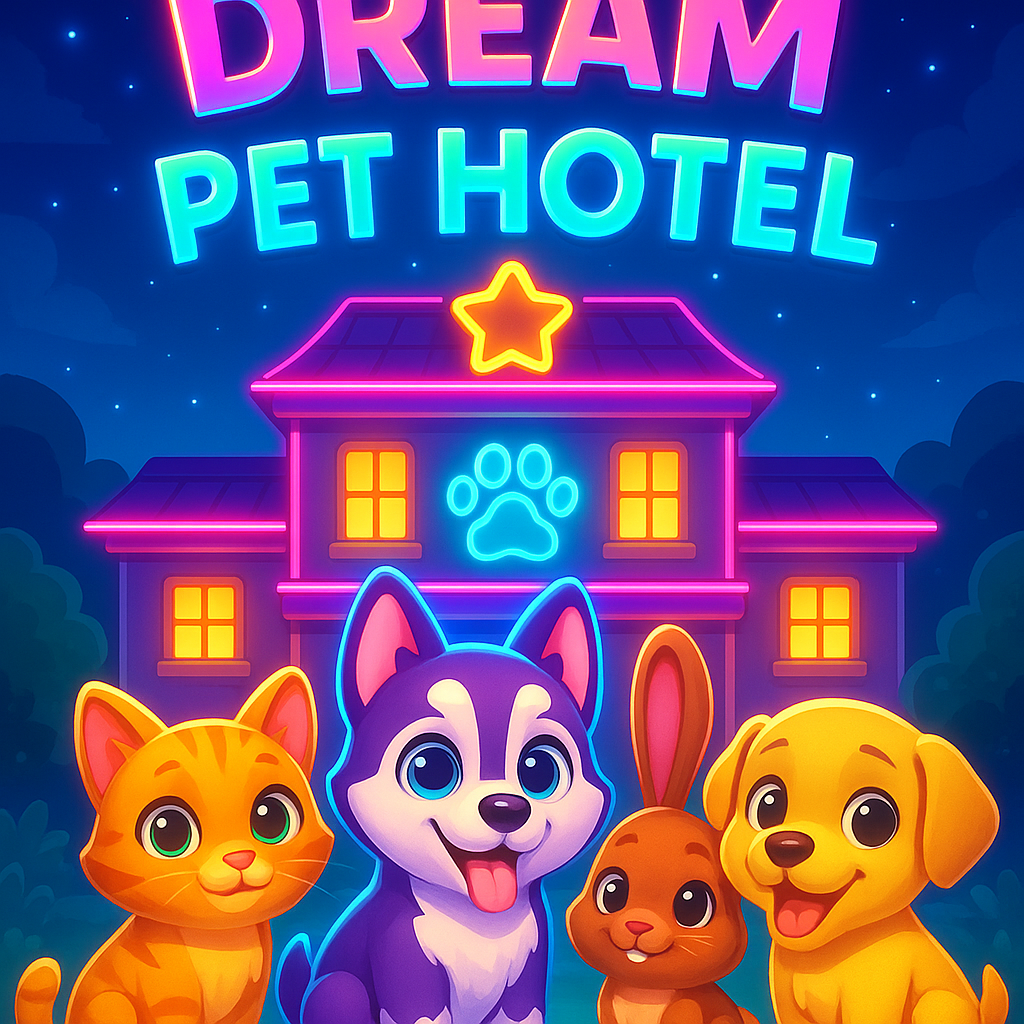
Dream Pet Hotel
Welcome to the whimsical and challenging world of Dream Pet Hotel, a captivating brain game that combines adorable animal care with intricate logistical puzzles. As the proud new manager of a fantastical hotel for pets, you are tasked with creating a paradise for your furry, feathery, and scaly guests. But this is no ordinary tycoon game; it is a delightful mental workout designed to engage your strategic planning, resource management, and problem-solving skills. Every day brings a new set of adorable clients with unique needs, and it's up to you to arrange rooms, assign staff, and manage services to keep tails wagging and purrs rumbling, all while expanding your hotel empire. This game perfectly fits into the brain games category, offering a fun yet intellectually stimulating escape that sharpens your mind while you play.
What is Dream Pet Hotel? An In-Depth Look
At its core, Dream Pet Hotel is a strategy and management simulation. You start with a modest lobby and a few basic rooms, and through careful decision-making, you grow your establishment into a five-star resort. The gameplay revolves around a cycle of checking in pets, fulfilling their specific requests, and ensuring they have a happy stay before checking out. Each pet type—from playful puppies and curious kittens to exotic birds and reptiles—requires different amenities. A parrot might need a spacious aviary with toys, while a pampered poodle might request a spa day with grooming and a fancy haircut. The complexity arises from managing limited space, staff energy, and in-game currency to upgrade facilities and unlock new, more demanding (and lucrative) pet species.
The brilliance of Dream Pet Hotel as a brain game lies in its layered challenges. It's not just about clicking fast; it's about thinking ahead. You must optimize the layout of your hotel for efficient workflow, prioritize tasks when multiple pets become restless simultaneously, and invest your earnings wisely to foster sustainable growth. This constant juggling act activates cognitive functions related to executive control, including task switching, working memory, and inhibitory control. You are not merely playing a game; you are engaging in a dynamic cognitive exercise disguised in a charming, pastel-colored package.
The Cognitive Benefits of Playing Dream Pet Hotel
Why categorize Dream Pet Hotel as a brain game? The benefits extend far beyond simple entertainment. Engaging with this type of complex simulation can have a tangible positive impact on mental agility.
- Strategic Planning & Foresight: Every upgrade and room placement is a strategic decision. Do you build another standard room to host more common pets, or do you save for an expensive aquarium suite to attract rare fish guests who pay more? This mirrors real-world strategic planning, enhancing your ability to anticipate outcomes and set long-term goals.
- Resource Management: You manage three key resources: coins (currency), gems (premium currency), and staff stamina. Learning to allocate these efficiently under pressure improves your real-life financial and resource allocation skills. It teaches opportunity cost—the idea that spending resources on one thing means forgoing another.
- Problem-Solving Under Constraints: When a VIP pet arrives and your best groomer is tired, you must solve the problem creatively. Perhaps you use a quick energy boost item or temporarily swap staff assignments. This flexible thinking is a cornerstone of effective problem-solving.
- Attention to Detail: Each pet has a happiness meter and specific wish bubbles. Success requires you to monitor multiple changing variables simultaneously, training your selective and sustained attention.
- Pattern Recognition: Over time, you begin to recognize patterns. Certain pet combinations work well together, and some upgrade paths are more efficient. Recognizing and utilizing these patterns is a key cognitive skill applicable to data analysis and learning in general.
By regularly playing Dream Pet Hotel, you are essentially giving your brain a comprehensive workout, strengthening neural pathways associated with logic, planning, and management. It's a testament to how modern brain games have evolved from simple puzzles to rich, immersive experiences that train a wider array of mental faculties.
Core Gameplay Mechanics and Features
To master the Dream Pet Hotel, understanding its core mechanics is essential. The game is built on an intuitive touch or click interface, but the depth beneath is substantial.
1. Hotel Layout and Room Management
Your hotel is a grid where you construct and arrange rooms. Initial rooms include basic suites, grooming stations, feeding areas, and playrooms. Each room has a function and a level. Upgrading a room reduces the time it takes to complete actions within it, increases its capacity, or unlocks new abilities. The spatial puzzle involves placing rooms so that your staff can move between them quickly, minimizing downtime and maximizing pet happiness. For instance, placing the grooming salon next to the puppy suites makes logical sense, as puppies frequently need grooming.
2. The Pet Guests
Pets are the heart of the game. They arrive at the check-in desk with a star rating indicating their potential payout and difficulty. Each pet has needs displayed in thought bubbles: Feed, Play, Groom, Sleep, etc. You must drag the pet to the correct room and assign a staff member to fulfill that need. As their needs are met, their happiness increases. A fully happy pet at check-out yields a maximum coin reward and sometimes special items or gems. Neglected pets will become unhappy and may leave early, costing you revenue and reputation.
3. Staff and Their Specializations
You hire and upgrade staff members like caretakers, groomers, and chefs. Each staff type is more efficient at specific tasks. Caretakers excel at playing and feeding, while groomers are faster at bath and haircut tasks. Staff have an energy bar that depletes as they work and refills over time or with items. Managing their energy is crucial to avoid bottlenecks in your hotel operations. Strategic hiring and upgrading your team is as important as upgrading the physical hotel.
4. Progression and Goals
The game guides you with a series of goals and quests. These provide direction and reward you with resources for completing them. There is also a tech tree or upgrade menu where you invest coins and materials to unlock new room types, decorative items (which boost overall happiness), and hotel expansions. The progression loop of earn-spend-upgrade is deeply satisfying and motivates continuous engagement, a hallmark of well-designed brain games that balance challenge with reward.
Advanced Strategies for Dream Pet Hotel Success
Moving from a novice manager to a magnate of the Dream Pet Hotel requires advanced strategy. Here are some proven tips to optimize your gameplay and maximize your cognitive engagement.
- Prioritize High-Value Guests: While you should try to keep all pets happy, focus your immediate attention on VIP pets or those with higher star ratings. Their rewards are significantly greater and can fund critical upgrades.
- Balance Your Upgrades: Avoid pouring all resources into one area. A common mistake is to have a Level 5 grooming salon but Level 1 feeding rooms, creating an imbalance. Strive for balanced development to ensure no single service becomes a bottleneck.
- Use the Pause Function Strategically: When things get overwhelmingly busy, use the pause button (if available) to assess the situation calmly. Plan your next several moves—which pet goes where, which staff member to assign. This deliberate planning is the essence of strategic thinking.
- Expand Thoughtfully: Unlocking new floors or wings is exciting but expensive. Ensure your current operation is generating stable income before taking on the debt of expansion. Calculate the return on investment for new rooms.
- Complete Daily Tasks and Events: Regularly check the special event tabs. These limited-time challenges offer unique rewards and often present novel constraints that force you to adapt your strategy, providing an excellent cognitive stretch.
| Feature | Strategic Impact | Cognitive Skill Trained |
| Room Placement | Optimizes staff travel time, increases service speed. | Spatial Reasoning, Efficiency Analysis |
| Staff Energy Management | Prevents work stoppages, requires shift planning. | Resource Allocation, Predictive Planning |
| Pet Happiness Multipliers | Rewards sequential need fulfillment, encourages order planning. | Sequential Logic, Priority Setting |
| Upgrade Cost-Benefit Analysis | Determines the most economically efficient path for growth. | Financial Literacy, Strategic Foresight |
Mastering these strategies transforms the game from a casual pastime into a profound exercise in management and logic, solidifying its place as a top-tier brain game.
Comparing Dream Pet Hotel to Other Pet-Themed Brain Games
The genre of pet management games is rich, but Dream Pet Hotel stands out for its specific blend of charm and mental challenge. For instance, a game like Pet Me Maze focuses on a different kind of puzzle. In that game, the challenge is primarily spatial navigation and pathfinding, guiding a pet through a labyrinth. It trains visual-spatial skills and planning in a more confined, puzzle-box environment. Dream Pet Hotel, conversely, offers a macro-management experience. You're not guiding one entity through a maze but orchestrating an entire system with multiple independent agents (pets and staff). It's the difference between solving a single complex equation and managing an entire spreadsheet of variables that interact in real-time.
Both are excellent brain games but cater to slightly different cognitive preferences. If you enjoy the systemic, business-simulator style of thinking with a cute aesthetic, Dream Pet Hotel is your ideal destination. Its continuous progression and open-ended growth provide a long-term cognitive engagement that simpler puzzle games may not offer.
The Importance of Aesthetics and Relaxation in Brain Training
An often-overlooked aspect of effective brain games is the learning environment, even a digital one. Dream Pet Hotel excels here with its bright, cheerful graphics, soothing color palette, and satisfying sound effects. The adorable pet designs trigger positive emotional responses. Why does this matter for cognitive training? Stress and anxiety are detriments to clear thinking and executive function. A relaxed, positive mental state is conducive to learning, creativity, and strategic planning. By creating a low-stress, high-joy environment, the game allows players to engage their problem-solving faculties without the interference of frustration. This makes the cognitive training more effective and sustainable. You are more likely to return for extended sessions when the experience is pleasurable, thereby increasing the overall "dose" of mental exercise.
Where to Play Dream Pet Hotel
Accessibility is key for any great game. Dream Pet Hotel is widely available on multiple platforms. A popular portal to play this engaging brain game is on Kizi.com, which hosts a vast collection of browser-based games. Playing on Kizi requires no download; you can start managing your pet paradise directly in your web browser. This instant-access model lowers the barrier to entry, allowing you to enjoy a quick cognitive session during a break or dive into a longer management marathon. The game's design, with its session-based gameplay (check-in/check-out cycles), also makes it perfect for both short and long play sessions, adapting to your schedule while consistently providing that mental workout.
The Social and Community Aspect
While primarily a single-player experience, Dream Pet Hotel often incorporates light social features, such as visiting friends' hotels or comparing progress on leaderboards. This adds a layer of social cognition. Seeing how others have designed their hotels can inspire new strategies and layouts, fostering social learning. Discussing upgrade paths and rare pet strategies with a community of players engages verbal and analytical thinking as you articulate your own strategies and critique others. This transforms the game from a solitary brain exercise into a shared intellectual hobby, further enriching its value as a brain game that stimulates not just logic, but also social intelligence and collaborative problem-solving.
Long-Term Engagement and Replayability
A common pitfall for many games is repetition. Dream Pet Hotel cleverly avoids this through its layered progression system and constant introduction of new elements. Just when you've mastered managing cats and dogs, you unlock a wing for exotic birds or reptiles, each with a completely new set of needs and required rooms. Seasonal events introduce temporary themes and special guest pets, requiring you to adapt your established strategies. This constant, gentle evolution of challenges is what neuroscientists refer to as "adaptive difficulty"—it keeps the brain in a state of flow, where the task is neither too easy nor impossibly hard. This state is optimal for cognitive growth and enjoyment. The endless pursuit of a more efficient, more beautiful, and more profitable hotel provides near-infinite replayability, making it a gift that keeps on giving for your gray matter.
Conclusion: Why Dream Pet Hotel is a Stellar Brain Game
In conclusion, Dream Pet Hotel is much more than a cute time-waster. It is a meticulously designed brain game that challenges and refines a suite of high-level cognitive skills, from strategic foresight and resource management to dynamic problem-solving and attention control. Its success lies in wrapping these rigorous mental exercises in an irresistibly charming and relaxing package, making the process of cognitive training genuinely enjoyable. Whether you are a casual player looking for a fun distraction or someone actively seeking to keep your mind sharp, Dream Pet Hotel offers a rewarding and effective experience. So, open those doors, welcome your first guest, and embark on a journey that is as beneficial for your mind as it is delightful for your heart. Your dream of running the ultimate pet paradise—and building a sharper brain—awaits.
FAQ
- Question: How does Dream Pet Hotel improve memory and organizational skills?
Answer: Dream Pet Hotel requires players to remember the specific needs, preferences, and schedules of numerous unique pets while managing a complex hotel layout. This constant recall and application of information strengthens both short-term and long-term memory pathways. The game's organizational demands, such as assigning pets to themed rooms and planning daily activity schedules, directly train executive function skills, teaching players to categorize information and prioritize tasks efficiently in a fun, low-pressure environment. - Question: What problem-solving and critical thinking skills does Dream Pet Hotel develop?
Answer: Players regularly face logistical puzzles, such as optimizing room layouts for pet happiness, resolving conflicts between incompatible animals, and efficiently allocating limited resources like treats and toys. These scenarios require analytical thinking, hypothesis testing, and adaptive planning. By experimenting with different solutions and observing the outcomes for their pet guests, players engage in a cycle of critical thinking that mirrors real-world problem-solving, enhancing their ability to think strategically and make informed decisions under constraints. - Question: Can Dream Pet Hotel enhance attention to detail and focus?
Answer: Success in Dream Pet Hotel hinges on noticing subtle cues, such as a pet's slight change in mood, a room that needs cleaning, or a hidden item that could boost a guest's happiness. This gameplay mechanic trains sustained and selective attention, requiring players to filter out distractions and focus on multiple important details simultaneously. The engaging, reward-based nature of caring for pets helps improve concentration stamina, a transferable skill that benefits tasks requiring meticulous observation in daily life. - Question: How does the social simulation in Dream Pet Hotel benefit cognitive empathy and social cognition?
Answer: Interpreting the emotions and needs of diverse pet characters, each with distinct personalities, exercises cognitive empathy—the mental ability to understand another's perspective. Players must deduce causes for a pet's unhappiness and choose appropriate comforting actions, which strengthens theory of mind skills. This practice in reading non-verbal cues and predicting behavioral outcomes based on needs can enhance real-world social cognition, making individuals more attuned to interpersonal dynamics and emotional states. - Question: What executive functions are trained by managing the Dream Pet Hotel business?
Answer: Running the hotel is an exercise in core executive functions: task initiation, cognitive flexibility, and inhibitory control. Players must independently start and sequence tasks like feeding, grooming, and playing. They must also flexibly shift strategies when unexpected events occur, like a new pet arrival or a special event. Managing impulses, such as not overspending on decorations, practices inhibitory control. These skills are foundational for self-regulation, planning, and adaptable thinking in academic, professional, and personal contexts. - Question: Does the creative customization in Dream Pet Hotel offer cognitive benefits?
Answer: Designing and decorating hotel rooms is not just an artistic outlet; it's a cognitive exercise in visuospatial reasoning and creative problem-solving. Players must mentally rotate objects, plan spatial arrangements for both aesthetics and functionality, and visualize end results. This process engages the brain's right hemisphere and fosters innovative thinking. Furthermore, expressing creativity in a structured goal-oriented environment can reduce stress, which is known to improve overall cognitive performance, including memory and focus, creating a positive feedback loop for brain health.