
 Loading...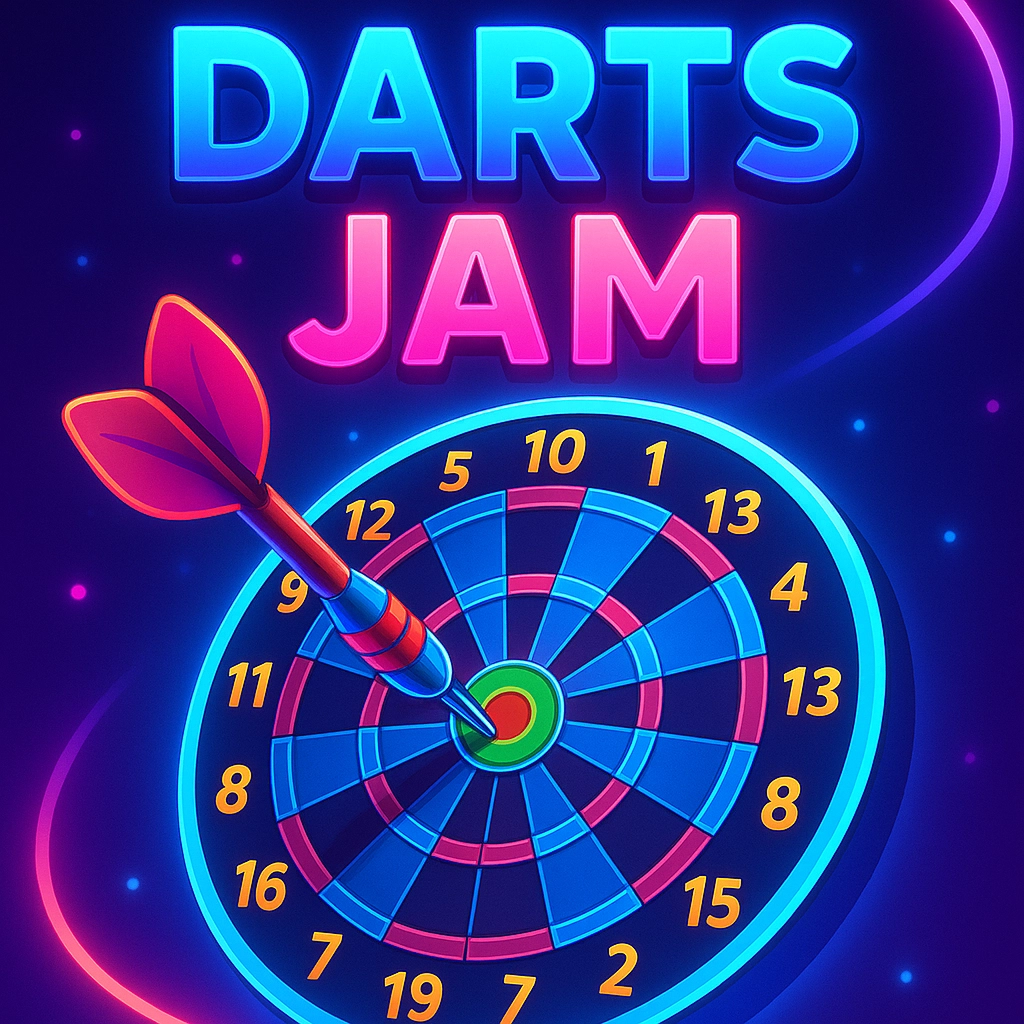
Darts Jam
In the vast and vibrant world of online gaming, where high-octane shooters and sprawling RPGs often dominate the spotlight, there exists a quieter, yet profoundly engaging genre: brain games. These are the titles that challenge our minds, sharpen our focus, and test our strategic mettle. Among these cognitive workouts, one game stands out for its perfect blend of classic skill, digital convenience, and mental gymnastics—Darts Jam. This isn't just another casual pastime; it's a digital reimagining of a centuries-old pub sport transformed into a compelling brain training exercise that tests your precision, patience, and planning under pressure.
From Pubs to Pixels: The Enduring Legacy of Darts
To fully appreciate the brilliance of Darts Jam, we must first understand its origins. The game of darts boasts a surprisingly rich history, believed to have started in medieval England. Soldiers would shorten their arrows and throw them at the bottom of a wine cask or a sliced tree trunk to pass the time. This simple activity evolved into a pub staple, a game of skill that required minimal equipment but immense concentration. The classic darts board, with its numbered sectors and punishing doubles and triples rings, became a universal symbol of friendly competition.
The transition from physical pub boards to digital simulations was a natural evolution, opening the game to a global audience. Darts Jam sits at the pinnacle of this evolution. It captures the essential thrill of lining up a perfect throw but removes the barriers of physical space, costly equipment, and the need for opponents to be in the same room. It transforms a social sport into a personal cognitive challenge, one you can engage with anytime, anywhere, making it a perfect fit for the "brain games" category.
Why Darts is a Secret Brain Powerhouse
At first glance, darts might seem purely physical—a test of hand-eye coordination. But any seasoned player will tell you it's almost entirely a mental game. This is why Darts Jam is such an effective brain training tool. Every single throw is a complex neurological process. Your brain must calculate distances, angles, and force. It must block out distractions and maintain a steady rhythm. It requires working memory to keep track of your score and the optimal path to finish the game. Here’s a breakdown of the core cognitive skills Darts Jam actively trains:
- Focus and Concentration: The ability to zone in on a specific target, ignoring all other stimuli, is paramount. A wandering mind means a wandering dart.
- Numerical Calculation & Strategic Planning: Games like '01 (501, 301) aren't just about hitting high numbers. They require constant mental arithmetic. You must calculate your remaining score, plan which segments to hit to leave a finish (like double 16 or bullseye), and adjust your strategy after every throw. This is pure, applied mathematics.
- Fine Motor Control & Hand-Eye Coordination: Your brain sends precise signals to your fingers and wrist to execute a consistent throwing motion. This neural pathway is strengthened with every game of Darts Jam.
- Mental Resilience and Composure: Missing a crucial double or hitting a dreaded "bust" score can be frustrating. The game teaches emotional regulation and the ability to reset your focus for the next throw—a skill valuable far beyond the game itself.
- Spatial Awareness: Judging the virtual board's layout and understanding how your "throw" will translate from your screen to a specific segment hones your spatial reasoning.
Diving into the Gameplay of Darts Jam
Darts Jam masterfully translates the physical darts experience into an intuitive digital format. The core gameplay loop is simple to grasp but offers near-infinite depth for mastery. Upon launching the game, you're presented with a crisp, visually appealing digital dartboard. The controls are typically streamlined for mouse, touchscreen, or even keyboard, requiring you to aim with a cursor and control the power of your throw with a timing mechanism.
The true beauty of Darts Jam lies in its game modes. You can practice against AI opponents of varying difficulty, from casual newcomers to professional-level bots that will punish any miscalculation. Many versions also feature online multiplayer, allowing you to test your honed skills against real people from around the world. The classic '01 games (starting from 501 or 301 points and reducing to zero by hitting a double) are the heart of the competitive experience. Other popular modes like 'Round the Clock' (hitting each number in sequence) and 'Cricket' (which focuses on closing specific numbers) provide variety and target different strategic muscles.
| Feature | Traditional Darts | Darts Jam (Digital Experience) |
| Accessibility | Requires physical board, darts, and space. | Playable anywhere on a computer or mobile device. |
| Skill Development | Develops physical throwing technique and mental math. | Primarily develops strategic planning, mental calculation, and digital hand-eye coordination. |
| Opponent Availability | Depends on finding people locally. | Instant access to AI and global online players 24/7. |
| Cost | Initial investment in equipment. | Typically free-to-play or low cost. |
| Cognitive Focus | Balanced physical/mental. | Heavily focused on cognitive skills: strategy, focus, calculation. |
The Strategic Mindset: How to Excel at Darts Jam
Moving from a novice to a proficient player in Darts Jam requires adopting a strategic mindset. It’s not about throwing as hard as you can at the triple 20. It’s about controlled, thoughtful play. The first step is mastering your "throw." Every digital darts game has a unique mechanic for releasing the dart—it might be a click, a swipe, or a timed button release. Consistency is key. Find a rhythm and stick to it, whether you're aiming for the top of the board or the bottom.
Score management is where the true brain game begins. In a game of 501, a good player is always thinking 2-3 throws ahead. The goal is to "set up" a finish, which is a score that can be taken out with a double (or the bullseye for 50 points). For example, a common strategy is to aim for a total score of 170, 167, or 164—all "checkout" numbers that can be finished in three darts. If you have 62 remaining, the optimal path is Treble 10, Single 10, Double 16. A game like Darts Jam trains your brain to instantly recall these "out charts" and calculate the best path after every single dart.
Furthermore, understanding probability is crucial. While the Triple 20 offers the highest potential score (60), it's also a small target. Sometimes, aiming for the larger Triple 19 or even stacking scores in the Treble 16/Bullseye area is a more consistent and strategic play, especially when you need to set up a specific double. This constant risk-reward analysis is a powerful cognitive exercise.
Beyond the Basic Game: The Cognitive Benefits of Regular Play
Engaging with Darts Jam regularly is more than just fun; it's a legitimate workout for your prefrontal cortex. The sustained concentration required mimics the focus needed for deep work or study, training your brain to resist distraction. The rapid mental arithmetic strengthens your working memory and numerical fluency, skills that decline if not used. Planning your checkout strategy enhances executive function—your brain's ability to manage complex tasks and switch between plans when something goes awry (like an errant dart landing in the 1).
For older adults, games like Darts Jam can be a fantastic tool for maintaining cognitive sharpness. For students, it's a fun way to engage the mathematical parts of the brain. For professionals, it's a short, satisfying mental reset that builds strategic thinking. Unlike many brain training apps that feel like chores, Darts Jam wraps its cognitive benefits in the compelling package of a competitive sport. The desire to beat your high score, out-think an AI opponent, or climb the online leaderboards provides intrinsic motivation that keeps you coming back, ensuring consistent mental stimulation.
From Digital to Physical: Taking Your Skills to the Board
One of the most exciting aspects of mastering Darts Jam is that the skills are largely transferable. The strategic knowledge, numerical calculations, and checkout patterns you learn are 100% applicable to throwing real steel-tip or soft-tip darts. While the physical muscle memory is different, your brain will already be trained. You'll walk up to a real dart board knowing that with 121 remaining, you should go for Treble 20, Treble 11, and Double 14. This bridges the gap between the digital brain game and the tangible social sport, allowing you to impress friends at a local pub or even join a casual league.
This connection highlights the unique position of Darts Jam. It serves as both a gateway to a real-world hobby and a self-contained cognitive gym. You can use it to learn the rules and strategies of darts without pressure, then confidently transition to physical play. Conversely, physical dart players can use Darts Jam to practice their mental math and strategy when they can't get to a board, keeping their minds sharp between sessions.
The Social and Competitive Landscape of Darts Jam
While brain games are often solitary, Darts Jam incorporates a vital social and competitive element. Online multiplayer modes connect you with a global community of enthusiasts. This adds a layer of psychological challenge—playing against a human opponent who is also calculating, adapting, and trying to outmaneuver you. It trains your ability to perform under a different kind of pressure, not just the pressure of the clock or your own expectations, but the pressure of direct competition.
Many iterations of the game feature tournaments, ranked ladders, and daily challenges. These structures provide goals and a sense of progression, which are key drivers of long-term engagement. The pursuit of climbing the ranks in Darts Jam ensures that you are consistently pushing your cognitive limits, seeking more efficient checkout paths, and learning to maintain peak concentration for longer periods. This structured competition fosters a growth mindset, where every loss is a learning opportunity to analyze your strategy.
Optimizing Your Darts Jam Experience for Maximum Benefit
To get the most out of Darts Jam as a brain training tool, a mindful approach is best. Don't just mindlessly throw darts for an hour. Set specific sessions with clear objectives. For example, dedicate one 20-minute session purely to practicing doubles. In another session, focus on your checkout strategy from 100 points down. Use the game's statistics trackers, if available, to identify weaknesses in your game—are you missing too many shots at Double 16? Is your scoring average dropping in the final legs of a match? This data-driven self-analysis is a meta-cognitive exercise in itself.
Combine your Darts Jam play with learning about professional darts. Watch professional matches online. Listen to commentators discuss player strategy. Notice how the pros manage their finishes and how they react under immense pressure. This external learning will inform your own gameplay, creating a rich feedback loop where you learn, apply, practice, and improve, all within the engaging ecosystem of the game.
Conclusion: The Perfect Bullseye for Your Brain
In the crowded landscape of digital entertainment, Darts Jam achieves something remarkable. It honors the deep tradition and skill of a classic pub sport while repackaging it as an accessible, engaging, and highly effective brain game. It proves that cognitive training doesn't have to be dry or repetitive; it can be thrilling, competitive, and deeply satisfying. By demanding focus, sharpening mental arithmetic, teaching strategic foresight, and building emotional resilience, Darts Jam offers a comprehensive workout for key cognitive functions.
Whether you are a complete newcomer curious about darts, a seasoned player looking for convenient practice, or simply someone seeking a fun way to keep your mind agile, Darts Jam is a standout choice. It bridges generations and formats, connecting the tactile history of the dartboard with the limitless potential of digital play. So take aim, calculate your path to victory, and experience firsthand how hitting a digital bullseye can feel like a major win for your brain. The challenge, the strategy, and the sheer enjoyment of Darts Jam await.
FAQ
- Question: What specific cognitive skills does playing Darts Jam help to train?
Answer: Playing Darts Jam primarily trains a combination of visuospatial processing, fine motor control, and strategic planning. The game requires you to visually calculate angles, distances, and the physics of the dart's trajectory to hit precise targets, which strengthens neural pathways involved in spatial reasoning. Simultaneously, the need for consistent, controlled taps or swipes hones fine motor skills and hand-eye coordination, while adapting to different targets and game modes engages your working memory and ability to plan sequences of shots under pressure. - Question: How does the fast-paced nature of Darts Jam benefit brain health compared to slower puzzle games?
Answer: The fast-paced, time-sensitive gameplay of Darts Jam provides unique benefits by training cognitive flexibility and processing speed under pressure. Unlike slower puzzle games that allow for deliberate thought, Darts Jam forces rapid decision-making and quick adjustments to new targets or obstacles, which is excellent for improving your brain's ability to switch tasks and process information efficiently. This type of time-pressured training can enhance real-world skills that require quick reactions and sustained attention, helping to keep your cognitive reflexes sharp. - Question: Can regularly playing Darts Jam improve real-world skills like focus or precision?
Answer: Yes, the consistent practice required in Darts Jam can translate to improved focus and precision in daily activities. The game demands sustained attention to hit increasingly difficult targets, training your brain to filter out distractions and maintain concentration on a single task. The repetitive refinement of your throwing technique to achieve bullseyes or complete trick shots builds a mindset of precision and deliberate practice, which can positively influence hobbies or tasks requiring careful hand-eye coordination, such as playing a musical instrument or certain sports. - Question: What makes Darts Jam an effective tool for cognitive maintenance in adults?
Answer: Darts Jam is effective for cognitive maintenance because it provides a fun, engaging form of targeted mental exercise that challenges multiple brain systems simultaneously. For adults, regularly engaging in activities that combine visuospatial reasoning, quick calculations, and motor control can help maintain neural plasticity and slow age-related cognitive decline. The game's progression system and varied challenges encourage consistent play, which is key to reaping long-term cognitive benefits, turning a simple pastime into a proactive habit for brain health. - Question: How does the scoring and progression system in Darts Jam motivate continued cognitive engagement?
Answer: The scoring and progression system in Darts Jam leverages principles of gamification to motivate sustained cognitive effort. By providing immediate feedback through scores, stars, or unlockable levels, the game creates a rewarding loop that encourages players to refine their strategies and improve their accuracy. This structured progression challenges players to continuously adapt and overcome slightly more difficult obstacles, which is crucial for cognitive training as it pushes the brain just beyond its comfort zone, fostering growth and skill consolidation in visuomotor and planning abilities. - Question: Are the cognitive benefits from Darts Jam supported by broader research on brain-training games?
Answer: The cognitive benefits targeted by Darts Jam align with research indicating that action video games requiring precise visuomotor control and rapid decision-making can enhance specific cognitive domains. Studies suggest that such games can improve spatial attention, task-switching ability, and processing speed. While benefits are often most pronounced for the specific skills practiced, the engaging and variable challenges in a game like Darts Jam provide a robust workout for the brain's attentional and sensorimotor networks, making it a valid and enjoyable component of a broader brain-healthy lifestyle.