
 (1 votes, average: 4.00 out of 5)
 Loading...
Rescue Sharp Turn
In the ever-expanding universe of online brain games, where logic puzzles and memory challenges reign supreme, a unique subgenre thrives on razor-sharp reflexes and split-second decision-making. Enter Rescue Sharp Turn, a captivating and adrenaline-pumping game that masterfully blends the cerebral planning of a brain teaser with the white-knuckle tension of an arcade classic. This isn't just about finding a pattern; it's about executing flawlessly under pressure, training your mind and your fingers to work in perfect, harmonious sync. As you navigate a desperate rescue mission through treacherous, winding paths, Rescue Sharp Turn demands more than just smart thinking—it requires intelligent, instantaneous action, cementing its place as a premier brain game for the modern player.
What is Rescue Sharp Turn? The Core Concept Explained
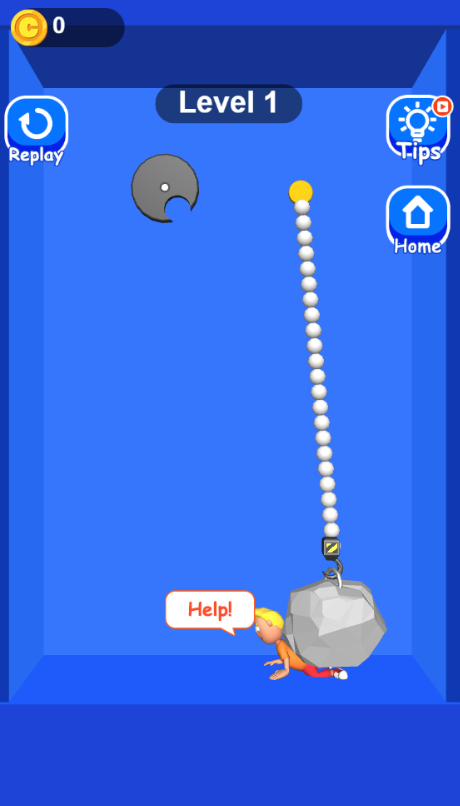
At its heart, Rescue Sharp Turn is a mission of urgency and precision. Players take control of a rescue vehicle—be it an ambulance, fire truck, or specialized carrier—tasked with navigating a complex, maze-like road system to reach a critical destination or collect endangered individuals. The core mechanic, as the name implies, revolves around managing sharp turns. The tracks are filled with sudden 90-degree angles, hairpin bends, and unpredictable junctions. Your primary tool is a simple tap or click to make the vehicle turn at the exact right moment. Turn too early, and you crash into the wall; turn too late, and you miss the corridor entirely, often resulting in a catastrophic failure of your mission.
The genius of Rescue Sharp Turn lies in its escalating complexity. Early levels introduce the basic mechanic on straightforward grids. However, the game quickly layers on challenges: increasing speed, introducing oncoming traffic or moving obstacles, placing precious "rescues" in off-shoot paths that require quick detours, and creating multi-level intersections where one wrong move sends you spiraling off course. This constant escalation forces the player to engage in advanced cognitive processing. You must read the track layout ahead, predict the sequence of turns, and pre-plan your finger movements, all while the vehicle moves at a pace that forbids hesitation. It transforms a simple action into a profound exercise in cognitive agility.
The Cognitive Gym: How Rescue Sharp Turn Exercises Your Brain
Classifying Rescue Sharp Turn solely as an arcade-style reaction game does it a disservice. It is a comprehensive brain workout that targets several key cognitive domains simultaneously, making it a powerful tool for mental fitness.
- Visual Processing Speed and Tracking: Your eyes must constantly scan the screen, absorbing the entire upcoming path. You're not just looking at the next turn, but the turn after that, and the obstacle three corners ahead. This enhances your ability to process complex visual information rapidly—a skill vital for reading, driving, and many professional tasks.
- Executive Function and Planning: Each level is a dynamic puzzle. You must formulate a plan (the sequence of taps) and then execute it. Higher levels require on-the-fly replanning when you encounter unexpected obstacles or decide to go for a risky bonus rescue. This engages the brain's prefrontal cortex, responsible for decision-making, planning, and behavioral control.
- Hand-Eye Coordination and Motor Precision: The direct link between what your brain perceives and how your finger reacts is put to the ultimate test. The margin for error shrinks as the game progresses, refining the neural pathways responsible for precise motor control.
- Predictive Analysis and Pattern Recognition: While tracks can seem chaotic, players soon learn to recognize common tile patterns and转弯 (turn) sequences. The brain begins to predict the likely path structure based on initial glimpses, shifting from reactive play to proactive strategy. This mirrors the pattern recognition used in mathematics, language learning, and strategic games like chess.
- Sustained Attention and Concentration: A single lapse in focus in Rescue Sharp Turn means failure. The game trains the mind to maintain a high level of concentrated attention over extended periods, resisting distraction and mental fatigue.
Mastering the Maze: Advanced Strategies for Rescue Sharp Turn
Moving from a novice to a master of Rescue Sharp Turn requires more than fast reflexes. It demands the adoption of sophisticated mental strategies. Here’s how top players approach the labyrinth.
1. The "Look-Ahead" Method: Never focus solely on the front of your vehicle. Your eyes should be fixed one to two turns ahead on the track. Your conscious brain processes the upcoming challenge while your subconscious and muscle memory handle the immediate turn. This split-focus technique is crucial for handling complex sequences.
2. Rhythm and Timing Over Reaction: While the game feels reactive, success actually comes from finding a rhythm. Many track sections have a consistent tempo. Instead of reacting to each wall as it appears, try to feel the beat of the turns—tap, pause, tap-tap, pause—transforming the challenge from visual reaction to auditory or kinesthetic timing.
3. Strategic Sacrifice for Greater Gain: Often, bonus rescues or faster routes are located on risky side paths. The strategic player learns when to ignore a bonus to ensure mission completion and when a calculated risk is worth the potential for a higher score. This risk-assessment skill translates directly to real-world decision-making.
4. The Pause-and-Plan Restart: If you repeatedly fail on a specific level, use your first few lives not to try to win, but to memorize. Intentionally crash at different points to map the entire track in your mind. Then, execute from memory. This shifts the brain's workload from processing to recall, a different and often more reliable cognitive function.
| Cognitive Skill | How Rescue Sharp Turn Trains It | Real-World Application |
|---|---|---|
| Visual Processing Speed | Tracking rapidly moving elements and predicting path layout. | Driving in heavy traffic, scanning documents for information. |
| Executive Function | Planning turn sequences and adapting plans instantly to obstacles. | Project management, multi-tasking, problem-solving under deadlines. |
| Hand-Eye Coordination | Precise tapping correlated with visual cues at high speed. | Playing musical instruments, surgical procedures, sports. |
| Sustained Attention | Requiring constant focus to avoid crashing for minutes on end. | Long study or work sessions, detailed analytical tasks. |
| Pattern Recognition | Learning and anticipating common track tiles and obstacle arrangements. | Data analysis, learning languages, diagnosing problems. |
The Lineage of Precision: Rescue Sharp Turn and Arcade Legacy
To fully appreciate Rescue Sharp Turn, one must understand its roots in the golden age of arcades. The game is a direct descendant of classic arcade game principles: easy to learn, difficult to master, and centered on a single, refined mechanic pushed to its extreme. Think of the precise drifting in Out Run or the lane-switching precision required in Paperboy. Rescue Sharp Turn distills this essence into a pure, minimalist format suitable for mobile and browser play.
However, it evolves the formula by removing luck and layering in strategic depth. Traditional arcade games often relied on memorization of fixed patterns. While memory plays a role here, the need for adaptive planning and the inclusion of optional objectives (like collecting all rescues) introduce a modern, goal-oriented brain game layer. It’s a perfect synthesis: the instant-gratification, skill-based thrill of the arcade cabinet married to the structured, progressive challenge of a contemporary cognitive trainer.
Beyond the Single Player: The Psychological and Social Appeal
The appeal of Rescue Sharp Turn extends beyond solo brain training. It taps into powerful psychological drivers. The "rescue" narrative, however simple, provides a compelling emotional "why" that abstract puzzles lack. You're not just turning; you're saving someone, which adds a layer of urgency and satisfaction missing from a simple high-score chase.
Furthermore, the game is perfectly suited for social and competitive play. Comparing high scores or level completion times with friends creates a community of practice. The "just one more try" hook is incredibly strong, as failure feels personal—a mistake in your timing, not random chance. This promotes a growth mindset: "I crashed because I turned late. Next time, I'll tap earlier." This cycle of failure, analysis, and incremental improvement is the core loop of effective learning and skill acquisition.
A Genre Among Peers: Comparing Rescue Sharp Turn to Other Brain Games
The brain game category is vast, from Sudoku and crossword puzzles to complex strategy titles. Rescue Sharp Turn occupies a distinct niche. Unlike turn-based logic puzzles, it operates in real-time, stressing time pressure and kinetic intelligence. Unlike pure reaction games, it deeply involves planning and foresight.
For instance, consider another excellent game that focuses on precision navigation under pressure: X-Trench Run. While both games share the theme of navigating a vehicle through a hazardous course, they offer different experiences. X-Trench Run often emphasizes 3D spatial awareness, shooting mechanics, and dodging in a more open environment. Rescue Sharp Turn, in contrast, is more abstract, puzzle-like, and strictly focused on the binary decision of *when to turn* on a constrained, often top-down, path. Both are superb for training reflexes and planning, but Rescue Sharp Turn feels more like solving a fast-paced, dynamic maze with a single, perfectly timed action.
Optimizing Your Play: Tips for Peak Performance
To get the most cognitive benefit and highest scores from Rescue Sharp Turn, consider your overall approach.
Environment Matters: Play in a setting with minimal distractions. Since the game trains sustained attention, external interruptions break the cognitive flow and diminish the training effect. Use headphones to immerse yourself in the game's audio cues, which can provide subtle timing hints.
Mind the Physical Interface: Whether you're using a touchscreen, mouse, or keyboard, ensure your input method is comfortable and responsive. A sticky key or a screen with input lag will unfairly hinder your performance and frustrate your learning process. Sometimes, a stylus can offer more precision than a finger on touchscreens.
Practice Deliberately: Don't just mindlessly replay. If you struggle with a specific turn type (e.g., two quick turns in succession), focus on that. Intentionally practice levels that emphasize that weakness. This deliberate practice, targeting specific skills, leads to far faster improvement than general play.
Take Breaks: Cognitive fatigue is real. When you find your performance dipping and reactions slowing, take a short break. This allows your brain to consolidate the motor and pattern learning that occurred during your session. You'll often return to find previously difficult levels now feel manageable.
The Verdict: Why Rescue Sharp Turn is a Brain Game Staple
Rescue Sharp Turn succeeds because it fulfills the core promise of a great brain game: it makes hard cognitive work feel like exhilarating play. It doesn't just test your existing skills; it actively builds new ones. It forges a direct connection between visual cortex, planning centers, and motor functions, creating a holistic mental workout packaged in a deceptively simple, irresistibly challenging game.
Its requirements are minimal—a browser or a mobile device—but its rewards are maximal: sharper reflexes, better planning abilities, improved concentration, and the profound satisfaction of mastering a complex skill through perseverance. In the pantheon of brain games, Rescue Sharp Turn stands out as a pure, intense, and exceptionally effective trainer for the fast-paced, decision-heavy demands of the modern world. It proves that sometimes, the sharpest turn isn't on the track, but in your own cognitive abilities, steering you toward faster, smarter thinking.
FAQ
- Question: What specific cognitive skills does 'Rescue Sharp Turn' train, and how does it improve them?
Answer: 'Rescue Sharp Turn' is designed to train and enhance several core cognitive skills, primarily focused on executive functions. The game's core mechanic of navigating sharp turns at high speed under time pressure directly targets processing speed, visual-spatial reasoning, and divided attention. By requiring players to quickly assess the track, anticipate obstacles, and execute precise maneuvers, it strengthens neural pathways associated with rapid decision-making and spatial awareness. This continuous, adaptive challenge promotes cognitive flexibility, as players must constantly update their mental models and reaction strategies to succeed in increasingly complex levels. - Question: How does the 'sharp turn' mechanic in this game benefit real-world cognitive performance?
Answer: The 'sharp turn' mechanic in 'Rescue Sharp Turn' serves as an excellent analog for real-world situations requiring rapid cognitive shifting and hazard response. Successfully navigating these turns trains the brain to filter out irrelevant stimuli and focus on critical information, a skill directly applicable to tasks like driving in heavy traffic or multitasking under pressure. This targeted practice in controlled, split-second decision-making can improve a player's overall mental agility, potentially leading to faster and more accurate reactions in daily life scenarios that demand quick thinking and precise motor coordination. - Question: Can playing 'Rescue Sharp Turn' help with attention and concentration?
Answer: Yes, 'Rescue Sharp Turn' is particularly effective at training sustained and selective attention. The game demands constant vigilance as players must monitor their speed, the track's layout, upcoming turns, and potential obstacles simultaneously. This environment forces the brain to maintain a high level of focused concentration over extended periods to avoid crashes. Regular engagement with this type of gameplay can help strengthen the brain's attentional networks, potentially improving a player's ability to concentrate on complex tasks outside the game and resist distractions in work or study environments. - Question: What makes 'Rescue Sharp Turn' an effective brain-training tool compared to other puzzle games?
Answer: 'Rescue Sharp Turn' distinguishes itself from traditional puzzle games by emphasizing dynamic, time-pressured processing over static logic. While puzzle games often train deductive reasoning and planning, 'Rescue Sharp Turn' provides a high-fidelity simulation for training real-time processing speed, visuomotor coordination, and adaptive thinking. The 'rescue' context adds a layer of urgency and consequence, which heightens engagement and emotional investment, factors known to improve neuroplasticity and learning retention. This combination of action, precision, and stakes creates a potent cognitive workout that targets a different, yet equally crucial, set of mental faculties. - Question: How does the progressive difficulty in 'Rescue Sharp Turn' support long-term brain health?
Answer: The progressive difficulty in 'Rescue Sharp Turn' is key to its brain-training efficacy, as it adheres to the neuroplasticity principle of 'adaptive challenge.' As players master one level of track complexity and speed, the game introduces sharper turns, tighter sequences, and new obstacles. This constant, incremental increase in demand forces the brain to adapt and form new neural connections, preventing cognitive stagnation. This process of continual learning and adaptation is associated with building cognitive reserve, which can help maintain mental acuity and potentially delay age-related cognitive decline by keeping the brain actively engaged and challenged. - Question: What practical insight should players keep in mind to maximize the brain-training benefits of 'Rescue Sharp Turn'?
Answer: To maximize cognitive benefits, players should approach 'Rescue Sharp Turn' with intentionality, not just as a casual pastime. Focus on consistency—short, regular play sessions are more effective for neuroplasticity than occasional marathon sessions. Pay conscious attention to your mistakes; analyzing why a turn was missed or a crash occurred engages metacognition, enhancing learning. Finally, embrace the challenge rather than frustration. The cognitive growth happens at the edge of your ability, so view difficult levels as opportunities to push your processing speed and reaction accuracy to new limits, which translates directly to sharper cognitive function.