
 Loading...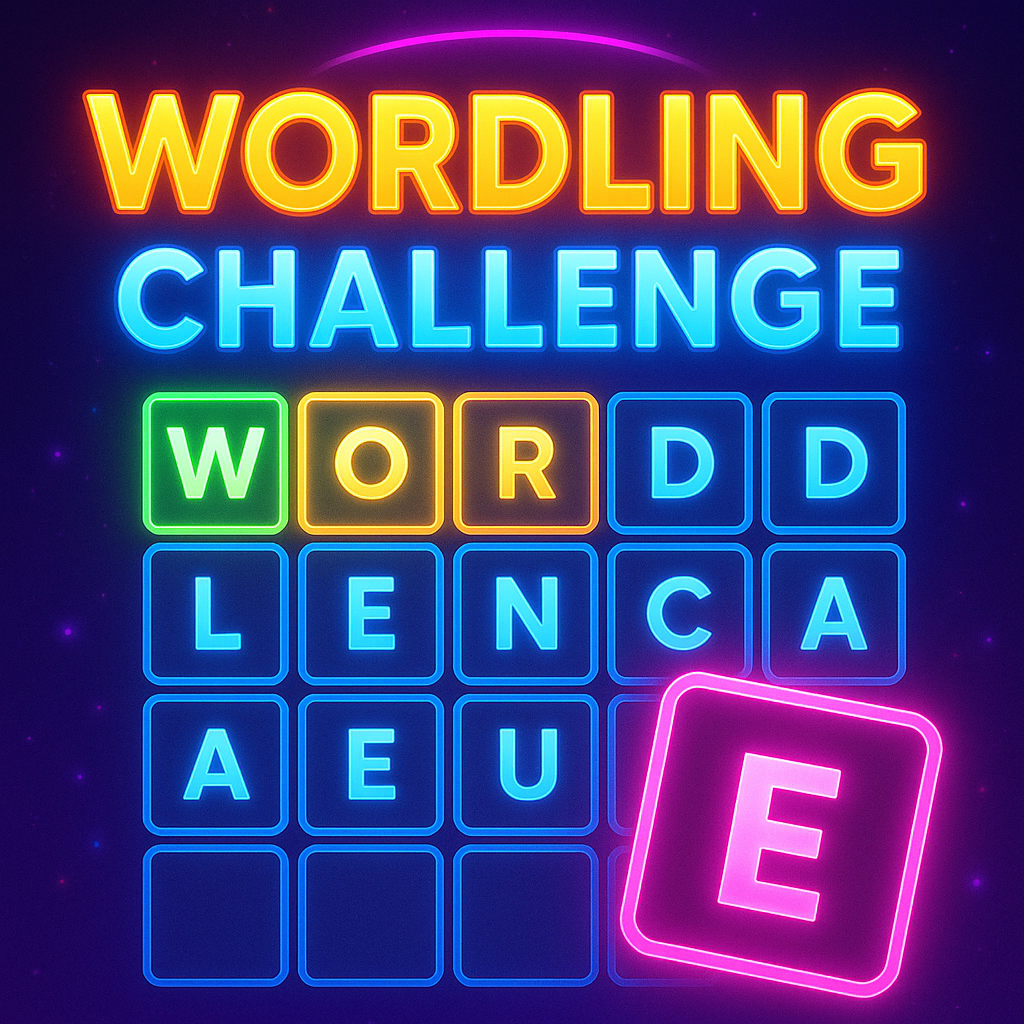
Wordling Challenge
In the ever-evolving world of word games, the Wordling Challenge has emerged as a captivating and addictive puzzle that tests your vocabulary, logic, and patience. Inspired by the global phenomenon of Wordle, this game offers a fresh twist with unique rules and endless replayability. Whether you're a seasoned word game enthusiast or a newcomer looking to sharpen your mind, the Wordling Challenge provides a stimulating experience that combines fun with cognitive exercise. This comprehensive guide will delve into every aspect of the game, from its basic mechanics to advanced strategies, ensuring you're well-equipped to master the Wordling Challenge and enjoy its many benefits.

What Is the Wordling Challenge?
The Wordling Challenge is a word-based puzzle game where players attempt to guess a hidden word within a limited number of attempts. Each guess must be a valid word, and the game provides feedback on the accuracy of your letters—similar to its predecessor, Wordle, but with variations in word length, difficulty levels, and daily challenges. The primary goal is to deduce the target word using clues about letter placement and correctness. For instance, if a letter is in the correct position, it might be highlighted in green, while a correct letter in the wrong spot could be yellow, and incorrect letters might be grayed out. This intuitive system makes the Wordling Challenge accessible to players of all ages, yet deep enough to engage even the most avid puzzlers.
Originating as a spin-off to capitalize on the word game craze, the Wordling Challenge has built a dedicated community of players who share their results and strategies online. Unlike some word games that rely on speed or vocabulary breadth alone, the Wordling Challenge emphasizes pattern recognition and deductive reasoning. This makes it not just a pastime but a mental workout that can improve cognitive functions over time. As you dive into the Wordling Challenge, you'll find it's more than a game—it's a daily ritual that sharpens your mind and connects you with a global community of word lovers.
How to Play the Wordling Challenge
Playing the Wordling Challenge is straightforward, but mastering it requires practice and strategy. The game typically starts with a blank grid, and you input your first guess—a word of a specific length, often five letters, though variations exist. After submitting your guess, the game provides color-coded feedback: green for correct letters in the right position, yellow for correct letters in the wrong position, and gray or another color for letters not in the word at all. Using this feedback, you refine subsequent guesses to narrow down possibilities until you identify the target word. Most versions of the Wordling Challenge limit you to six attempts, adding a layer of pressure that enhances the puzzle-solving thrill.
To excel in the Wordling Challenge, it's essential to start with strong opening words that include common vowels and consonants. For example, words like "CRANE" or "SLATE" are popular choices because they cover frequent letters, giving you a solid foundation for deduction. As you progress, pay attention to letter frequency in the English language—e, t, a, o, i, n, s, h, and r are among the most common, so incorporating them early can speed up your solving process. Additionally, the Wordling Challenge often features themed words or daily puzzles that align with holidays or events, keeping the content fresh and engaging. If you ever feel stuck, remember that the game is designed to be solvable with logical thinking; avoid random guesses and instead use the process of elimination based on the clues provided.
Basic Rules and Mechanics
The core rules of the Wordling Challenge are simple: guess the hidden word within the allotted tries, using the feedback to guide you. Each guess must be a valid word from the game's dictionary, which typically includes common English words but may exclude obscure terms. The feedback system is immediate and non-negotiable—if a letter is green, it's correct and in the right spot; if yellow, it's in the word but elsewhere; if gray, it's not in the word at all. This mechanic encourages players to think critically about word structure and letter patterns. Some versions of the Wordling Challenge also include hints or power-ups, such as revealing one correct letter, but these are often limited to maintain the game's challenge. Overall, the Wordling Challenge balances simplicity with depth, making it easy to learn but hard to master.
Strategies for Excelling at the Wordling Challenge
Success in the Wordling Challenge isn't just about having a vast vocabulary; it's about employing smart strategies that maximize your chances with each guess. One effective approach is to use a systematic method, such as starting with words that include a mix of vowels and common consonants. This helps you quickly identify which letters are present and where they might fit. For instance, if your first guess yields several yellow or green tiles, you can use that information to form a more targeted second guess. Another key strategy is to avoid repeating letters unnecessarily in early attempts, as this wastes valuable guesses. Instead, focus on covering as many new letters as possible to gather more data.
As you advance in the Wordling Challenge, consider leveraging word families and patterns. For example, if you know that the word contains "ing" at the end, you can prioritize guesses that fit that suffix. Similarly, paying attention to letter position frequency—like how "s" often appears at the end of plural words—can give you an edge. Many top players of the Wordling Challenge also recommend keeping a mental or physical note of eliminated letters and possible word matches to avoid confusion. If you're playing a timed version, practice under pressure to improve your speed without sacrificing accuracy. Remember, the Wordling Challenge is as much about logic as it is about language, so treat it like a puzzle that requires both creativity and analytical thinking.
Advanced Tips and Tricks
For those looking to dominate the Wordling Challenge, advanced techniques can make a significant difference. One method is to use "word ladders" or gradual changes between guesses, where you alter one letter at a time to test specific hypotheses. This is particularly useful when you have partial information from feedback. Additionally, familiarize yourself with common word patterns in English, such as consonant-vowel-consonant structures or frequent bigrams (two-letter combinations like "th" or "er"). Another pro tip is to analyze the game's dictionary if possible; some versions of the Wordling Challenge use a fixed word list, and knowing it can help you anticipate likely targets. However, avoid over-reliance on this, as it might reduce the fun. Instead, embrace the challenge and use these strategies to enhance your problem-solving skills. The Wordling Challenge rewards persistence and adaptability, so don't be discouraged by tough puzzles—each one is a learning opportunity.
Benefits of Playing the Wordling Challenge
Engaging in the Wordling Challenge regularly offers numerous cognitive and emotional benefits. Firstly, it boosts vocabulary and spelling skills by exposing players to a wide range of words and their correct usage. This is especially valuable for language learners or anyone looking to refine their communication abilities. Secondly, the game enhances critical thinking and problem-solving skills, as it requires logical deduction and pattern recognition—skills that are transferable to real-life situations like work projects or decision-making. Studies have shown that puzzle games like the Wordling Challenge can improve memory and focus by stimulating neural pathways associated with learning and recall.
Moreover, the Wordling Challenge provides a sense of accomplishment and stress relief. Solving a difficult puzzle releases dopamine, the "feel-good" neurotransmitter, which can elevate mood and reduce anxiety. The social aspect, such as sharing results with friends or competing on leaderboards, fosters community and connection, combating feelings of isolation. For older adults, regularly playing word games has been linked to a lower risk of cognitive decline, making the Wordling Challenge a fun way to support brain health. In a world filled with fast-paced digital distractions, this game offers a mindful escape that encourages slow, deliberate thinking. Whether you play for a few minutes a day or immerse yourself in longer sessions, the Wordling Challenge is a rewarding addition to your routine.
Comparison with Other Word Games
The Wordling Challenge stands out in the crowded field of word games due to its unique blend of simplicity and depth. While it shares DNA with classics like Scrabble or Boggle, it differs in its focus on deduction rather than word formation or speed. For example, in Scrabble, players build words from a set of letters, emphasizing vocabulary breadth and strategic placement, whereas the Wordling Challenge is about uncovering a pre-determined word through clues. Similarly, games like Crossword puzzles test knowledge and word associations, but the Wordling Challenge is more interactive and immediate in its feedback. If you enjoy the Wordling Challenge, you might also appreciate Wordle Unlimited, which offers endless variations and customizations to keep the experience fresh.
Another key comparison is with the original Wordle, which popularized this genre. The external link to the New York Times Wordle shows how the Wordling Challenge builds on that foundation with added features like multiple difficulty levels or themed puzzles. Unlike Wordle, which is often a daily one-off, the Wordling Challenge might offer continuous play, making it ideal for those who want more practice or variety. The table below highlights some key differences between the Wordling Challenge and other popular word games to help you understand its place in the gaming landscape.
| Game | Primary Focus | Typical Play Time | Skill Emphasis |
|---|---|---|---|
| Wordling Challenge | Deduction and pattern recognition | 5-10 minutes per puzzle | Logic, vocabulary |
| Wordle | Daily word guessing | 5 minutes | Vocabulary, patience |
| Scrabble | Word building and strategy | 30-60 minutes | Vocabulary, spatial reasoning |
| Crosswords | Knowledge and word associations | 15-45 minutes | General knowledge, memory |
| Boggle | Speed and word finding | 3 minutes | Quick thinking, pattern recognition |
This comparison shows that the Wordling Challenge occupies a niche that emphasizes mental agility over raw knowledge or speed, making it appealing to a broad audience. Its relatively short play sessions fit well into busy schedules, while its addictive nature encourages repeat engagement. As word games continue to evolve, the Wordling Challenge represents a modern take that leverages digital interfaces for intuitive gameplay.
The Social and Community Aspects of the Wordling Challenge
One of the most compelling features of the Wordling Challenge is its ability to foster community and social interaction. Many players share their daily results on social media platforms, using standardized formats to display their progress without spoilers. This creates a sense of camaraderie and friendly competition, as friends and strangers alike compare strategies and celebrate successes. Online forums and groups dedicated to the Wordling Challenge have sprung up, where enthusiasts discuss tips, dissect difficult puzzles, and even create custom challenges. This social dimension transforms the game from a solitary activity into a shared experience, enhancing its appeal and longevity.
In addition to online communities, the Wordling Challenge can be played in groups or families, making it a great bonding activity. For example, parents and children can collaborate on guesses, turning it into an educational tool that promotes teamwork and communication. Some versions of the Wordling Challenge include multiplayer modes or tournaments, where players compete for high scores or fastest times. This competitive edge adds excitement and motivation, pushing players to improve their skills. The Wordling Challenge also often incorporates leaderboards and achievements, providing tangible goals to strive for. By blending individual puzzle-solving with social elements, the game strikes a balance that keeps players engaged over the long term.
How the Wordling Challenge Adapts to Different Skill Levels
The Wordling Challenge is designed to be inclusive, offering options for players of all skill levels. Beginners can start with easier settings, such as shorter word lengths or more attempts, to build confidence. As they progress, they can increase the difficulty by choosing longer words, fewer guesses, or additional constraints like time limits. Many versions of the Wordling Challenge include tutorial modes or hints for newcomers, ensuring that no one feels overwhelmed. For advanced players, hard modes might eliminate common letters or introduce obscure vocabulary, providing a steep challenge that tests even the most experienced puzzlers.
This adaptability makes the Wordling Challenge suitable for a wide audience, from children developing language skills to adults seeking mental stimulation. Educators have even begun incorporating similar games into classrooms to enhance literacy and critical thinking. The Wordling Challenge's scalability means that it can grow with the player, offering endless opportunities for improvement. If you're new to word games, don't hesitate to start slow and gradually ramp up the difficulty—the Wordling Challenge is meant to be enjoyable, not frustrating. With practice, you'll find yourself solving puzzles faster and with greater accuracy, reaping the cognitive benefits along the way.
The Evolution and Future of the Wordling Challenge
Since its inception, the Wordling Challenge has evolved significantly, incorporating player feedback and technological advancements. Early versions were simple web-based games, but now you can find apps with enhanced graphics, sound effects, and interactive features. Developers continue to add new modes, such as endless play, themed events, or collaborative puzzles, to keep the experience fresh. Looking ahead, the Wordling Challenge might integrate artificial intelligence to offer personalized challenges based on your playing style or difficulty preferences. There's also potential for virtual reality or augmented reality versions, immersing players in a fully interactive word-solving environment.
The future of the Wordling Challenge looks bright, as word games remain a popular genre in the gaming industry. With the rise of mobile gaming and casual puzzles, it's likely that the Wordling Challenge will continue to attract new players and innovate. Community-driven content, such as user-generated word lists or puzzles, could further expand its reach. As it evolves, the core appeal of the Wordling Challenge—its blend of logic, language, and fun—will undoubtedly remain, ensuring its place as a beloved pastime for years to come. Whether you're a casual player or a dedicated enthusiast, there's always something new to discover in the world of the Wordling Challenge.
Conclusion: Embrace the Wordling Challenge
The Wordling Challenge is more than just a game; it's a tool for mental sharpness, a source of joy, and a gateway to a vibrant community. By understanding its rules, employing effective strategies, and appreciating its benefits, you can fully immerse yourself in this engaging puzzle experience. Whether you play alone or with others, the Wordling Challenge offers a rewarding escape that stimulates your brain and brightens your day. So why wait? Dive into the Wordling Challenge today and see how many words you can conquer—it's a journey of discovery that never grows old. With each puzzle, you'll not only improve your skills but also join millions of players worldwide in celebrating the power of words.
FAQ
- Question: What cognitive skills does Wordling Challenge primarily develop?
Answer: Wordling Challenge systematically enhances multiple cognitive domains through its word puzzle mechanics. The game primarily strengthens verbal fluency and vocabulary recall by requiring players to generate words from limited letter sets, exercising the brain's lexical retrieval systems. Additionally, it develops pattern recognition and mental flexibility as players must constantly rearrange letters to discover new word combinations, training executive functions in the prefrontal cortex. - Question: How does Wordling Challenge improve memory function?
Answer: Wordling Challenge engages both working memory and long-term memory systems through its progressive difficulty structure. Players must temporarily hold potential word combinations in working memory while testing different arrangements, strengthening the brain's capacity for temporary information storage. The repeated exposure to word patterns and vocabulary also reinforces neural pathways in the hippocampus, enhancing long-term verbal memory retention and recall efficiency. - Question: Can Wordling Challenge help with problem-solving abilities in daily life?
Answer: The problem-solving framework in Wordling Challenge directly translates to real-world cognitive challenges. By training players to approach word puzzles systematically—breaking down complex letter combinations into manageable components—the game develops strategic thinking patterns applicable to daily problem-solving scenarios. This mental exercise enhances cognitive flexibility, allowing players to adapt more readily to unexpected challenges and generate creative solutions in professional and personal contexts. - Question: What makes Wordling Challenge different from other word games for brain training?
Answer: Wordling Challenge distinguishes itself through its unique combination of time pressure and combinatorial complexity, creating a more comprehensive cognitive workout. Unlike simple word searches or crosswords, Wordling Challenge requires simultaneous engagement of multiple cognitive processes including rapid lexical access, mental rotation of letter sequences, and strategic planning under constraints. This multi-faceted approach stimulates broader neural networks, making it particularly effective for comprehensive brain training compared to more singular-focus word games. - Question: How does regular play of Wordling Challenge benefit long-term cognitive health?
Answer: Regular engagement with Wordling Challenge provides sustained cognitive stimulation that supports long-term brain health through neuroplasticity. The consistent mental exercise helps maintain neural connectivity and may contribute to cognitive reserve, which is associated with reduced risk of age-related cognitive decline. By challenging multiple cognitive domains simultaneously, Wordling Challenge promotes broader brain network efficiency, supporting overall cognitive vitality and mental sharpness over time. - Question: What specific executive functions does Wordling Challenge target?
Answer: Wordling Challenge specifically targets three core executive functions: cognitive flexibility, inhibitory control, and working memory updating. The game demands constant mental shifting between different word possibilities (flexibility), requires suppressing obvious but incorrect word choices (inhibition), and necessitates continuous updating of potential solutions in mind (working memory). These executive function improvements translate to better multitasking, decision-making, and attention management in everyday cognitive tasks beyond the game environment.